
Epoxy Resins
Epoxy resin is a two-component system (resin + hardener) that cures after mixing into a hard, durable and chemically resistant casting. Thanks to its strength, adhesion and dimensional stability it is used for river and designer tables, epoxy paintings, resin jewellery, lamps, clocks, serving boards and other decorative and functional castings.
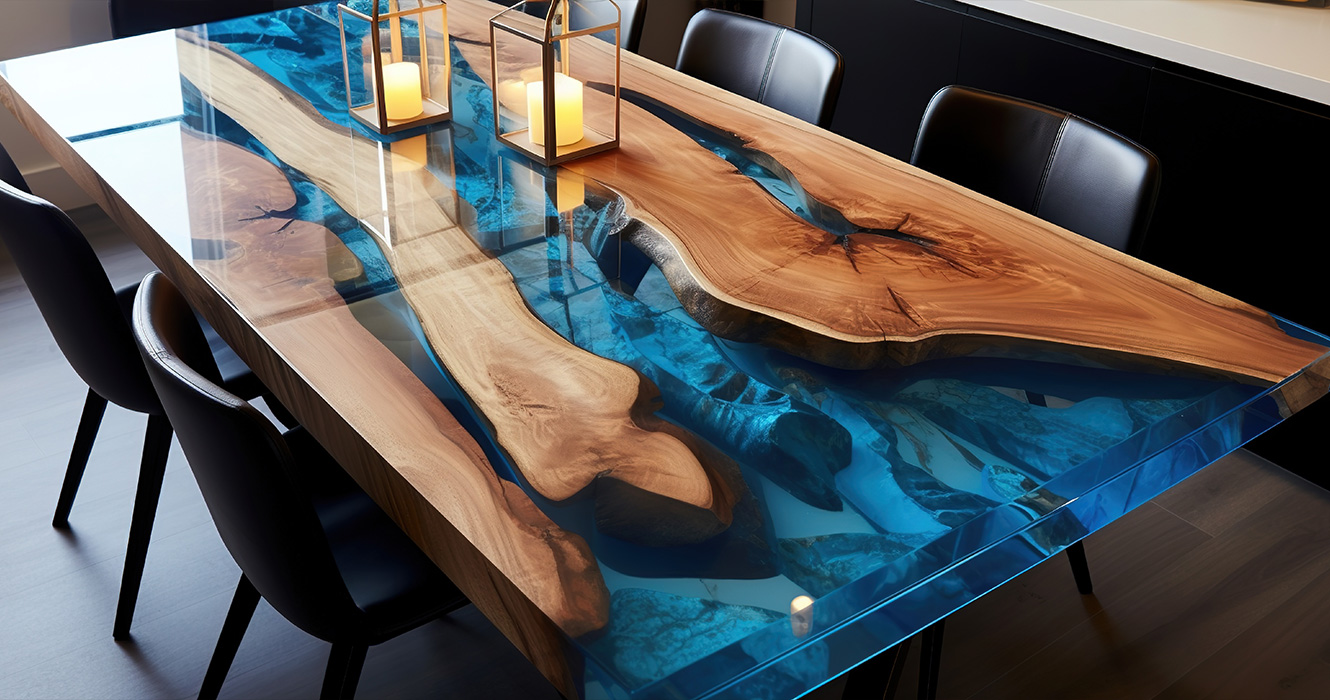
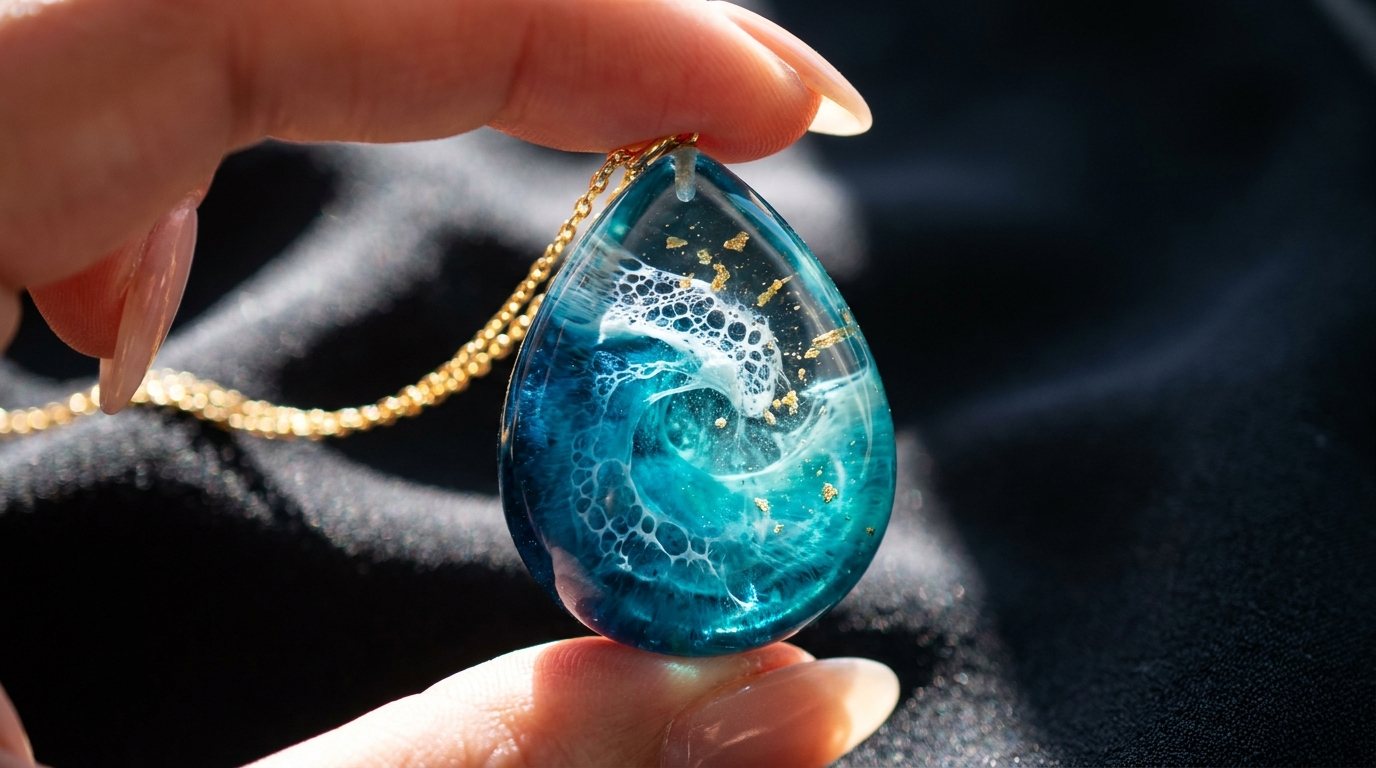
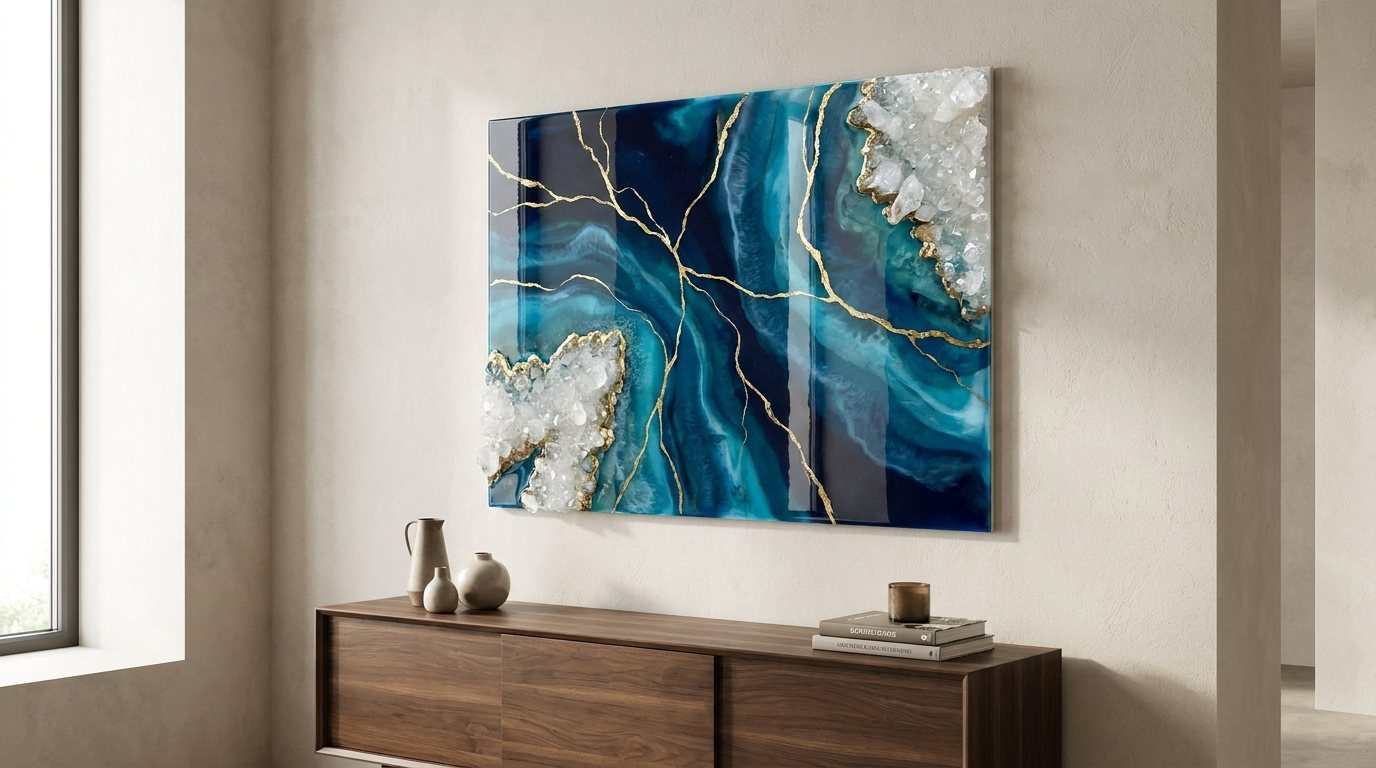
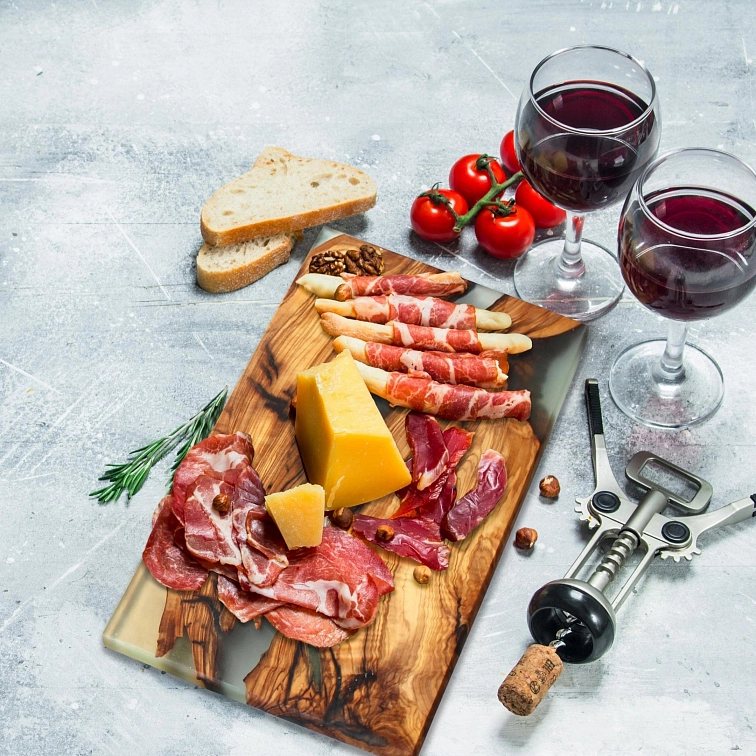 Not sure which resin to choose?Pick from the photos what you want to make – the interactive guide will recommend a system to suit. Below you will also find comparisons, the strengths of each system and a full buyer’s guide. ?
We’ll help you choose an epoxy resin
Answer one question and we’ll recommend proven systems from our range – we compare DIPON systems as well as other brands we stock.
Recommended epoxy resins by project
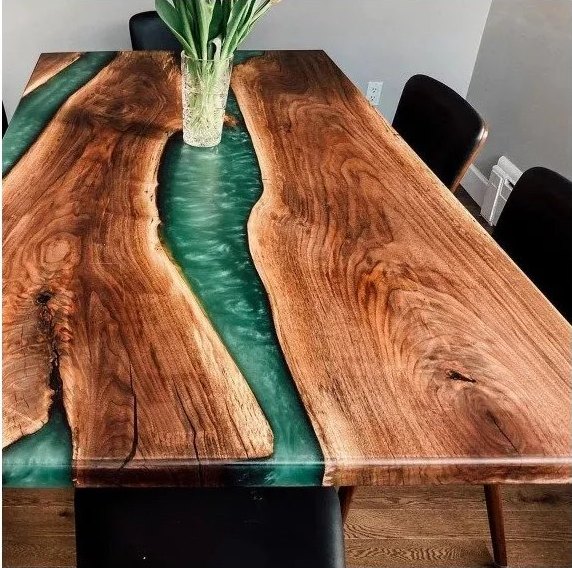
River and designer tables
Deep pours between wood – low viscosity, long pot life, layers up to 10 cm.
Jewellery and small castings
Very fluid systems that flow into every detail and cure quickly ready for polishing.
Paintings and geode art
Thicker consistency for control over pigments, layering and cell effects.
Boards and food-contact surfaces
Systems certified for food contact FOOD SAFE
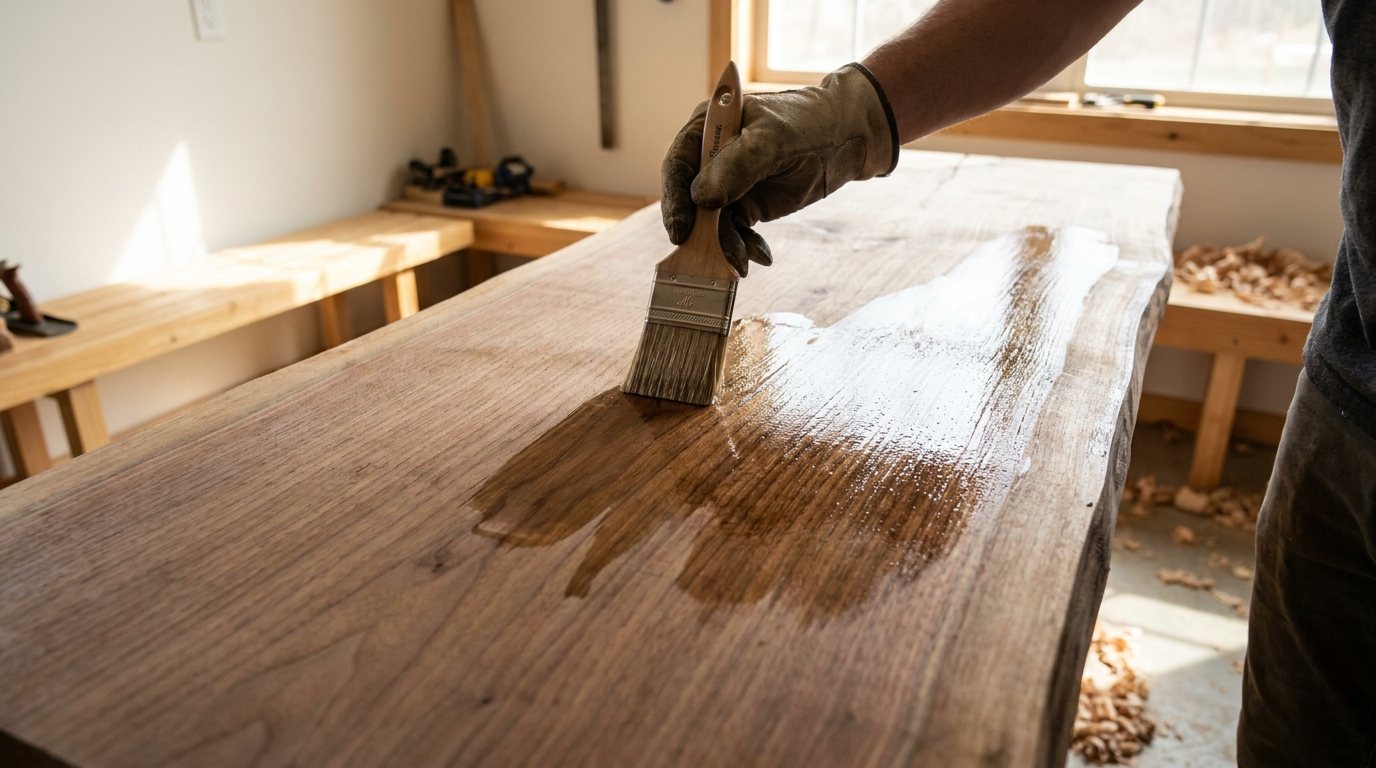
Sealing and wood preparation
Closing the pores before the main pour – protection against bubbles.
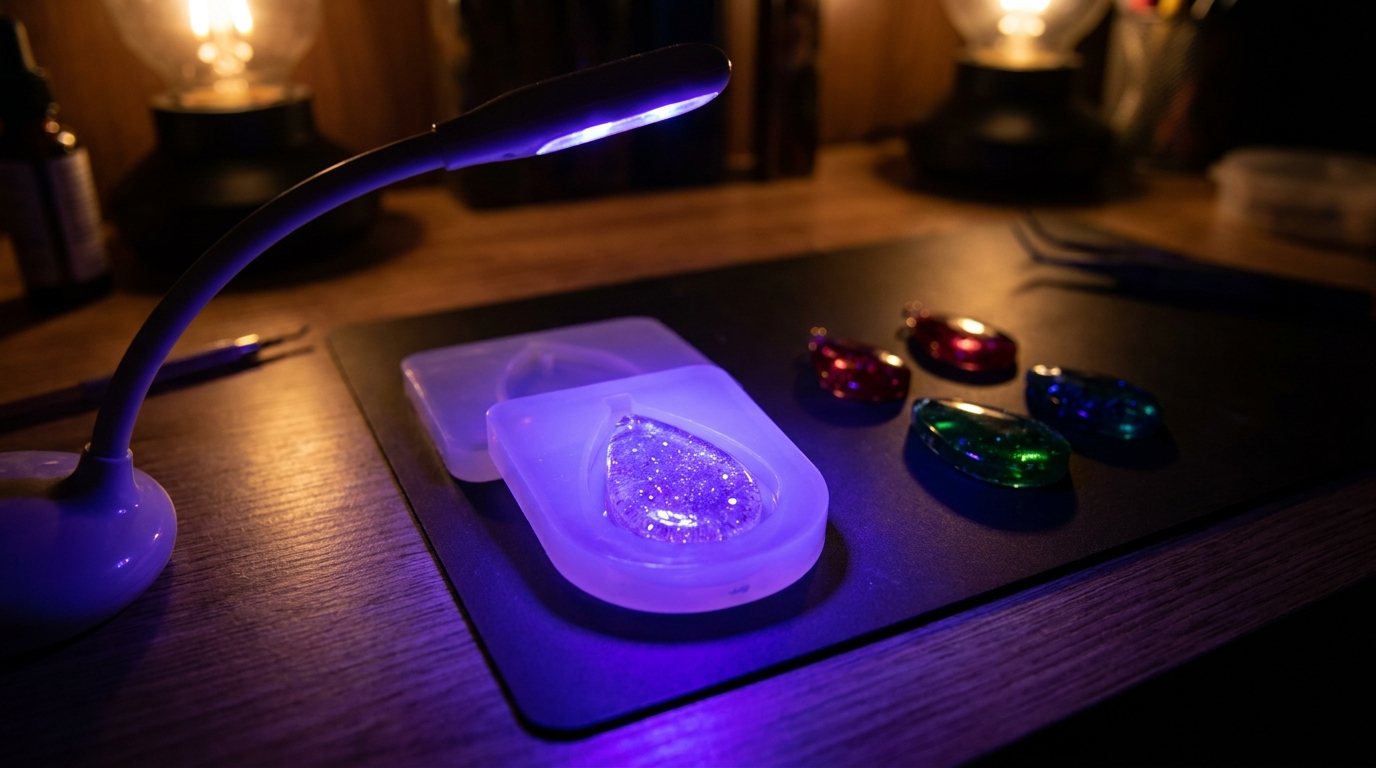
Working with a UV lamp
No mixing, no waiting – cured by UV light in minutes.
The three main DIPON systems – pros and cons
Made by Germany’s DIPON GmbH – a specialist in casting epoxies. Every system has its strengths and its limits; choose by the project, not by the name.
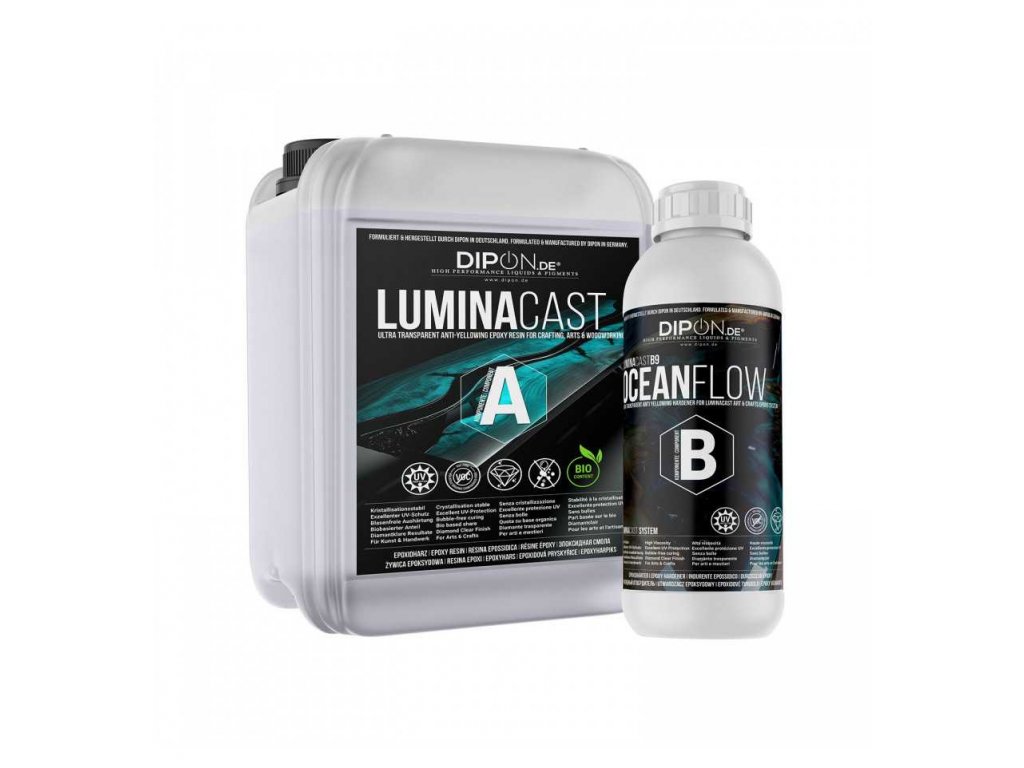 LuminaCast10 systems · from sealing to 10 cm pours
- one resin + 10 hardeners – from sealing to a river table without switching brands
- maximum UV protection across the whole range
- the entire range is food-contact safe – LuminaCast 9 is certified by the Czech National Institute of Public Health
- the deep-pour hardeners (8, 9) cure in 3–5 days – plan for the time
- 10 variants = a harder choice (the guide above will help)
 EpoxyPlast 3D3 hardeners by pour depth
- a hardener matched exactly to the depth: B20 (2 cm) · B50 (5 cm) · B100 (10 cm)
- cures from as low as 10–15 °C – works in a cooler workshop too
- VOC 0 g/l, sandable in 2–3 days
- different projects need different hardeners
- a smaller choice of effect variants than LuminaCast
 HoneyResinart & top coat resin
- fast set – layering without long waits
- high gloss and mechanical resistance – geodes, top coat, 3D floors
- thick consistency holds pigment effects in place
- not suitable for deep castings – thin layers only
- shorter pot life – you need your process ready
Epoxy resins compared by casting thickness
The single most important parameter: how thick a layer can be poured at once without the mix overheating.
| Casting thickness | Typical projects | Recommended systems |
|---|---|---|
| up to 1 cm | jewellery, coasters, thin fills | LuminaCast 1 Fast Set Prime · LuminaCast 3 Crystal Flow · EpoxyPlast 100P |
| up to 2 cm | bowls, pendants, small decorations | LuminaCast 2 Coaster Cast · LuminaCast 4 Gem Flow · EpoxyPlast B20 JewelCast |
| up to 5 cm | boards, lamps, coffee tables | LuminaCast 8 Table Flow · EpoxyPlast B50 Deep Pour · Epoxin Dekor |
| up to 10 cm | river tables, headboards, large castings | LuminaCast 9 Ocean Flow · EpoxyPlast B100 UltraPour |
Epoxy resin for wood
Looking for a resin for wood? Epoxy is used on wood in four main scenarios – pick the type of system accordingly:
- Pouring and river tables – deep pours between wood: casting epoxy resin, and for tabletops resin for making tables.
- Filling cracks, knots and flaws in wood – low-viscosity casting systems that flow into every detail.
- Sealing absorbent wood before the main pour – sealing resin against bubbles.
- A glossy, durable surface – a final table-top layer followed by sanding and polishing.
For food contact (kitchen and dining surfaces) choose a certified system. How much material you will need can be worked out using our guide to calculating the amount.
Types of epoxy resin by application
Epoxy resins differ in viscosity, cure time, clarity and strength. Choosing the right type is decisive for every project – below is an overview of the most common categories.
Casting epoxy resins (Casting Resin)
For clear, deep castings – epoxy and river tables, doors and headboards, clocks, lamps, jewellery and serving boards. They have low viscosity, a long pot life and high clarity.
Special (effect) resins
For creative work with pigment control and layering – epoxy paintings and geode art, repeated pouring of thin layers, fast systems and high-strength wood repairs.
Sealing resins
They close the pores in the material (most often wood), minimise bubbles and form an adhesion bridge for the layers above.
Resins for surface layers (Table Top, Coating)
For a thin, clear and durable surface layer – coffee and dining tables, wooden boards and decorations, clocks and protective coatings. They excel at self-levelling, clarity and UV stabilisation. The final top layer is handled by Top Coat.
Stabilising epoxy resins
For strengthening damaged or soft wood – stabilised wood, knife scales, jewellery, golf club grips and premium pens.
Floor resins
Casting systems for designer poured and 3D clear floors, with high resistance to chemicals, UV light and mechanical wear.
Laminating resins
Low-viscosity systems for composite lamination (hand lay-up, filament winding, RTM / RIM / SCRIMP, vacuum infusion) – ideal for moulds, models and structural composites.
How to choose the right epoxy resin? Watch the key parameters
Not every epoxy resin suits every project. Always follow the technical data sheet (TDS) and watch these parameters:
- Food-contact certification – for tables, boards and bowls, check the certification; in the EU not every system is approved for food contact.
- UV resistance – UV light causes yellowing; good stabilisation keeps it clear for years.
- Gel time – when the resin thickens to a honey-like consistency; important for pigment effects and multi-stage pours.
- Mixing ratio – the exact ratio of parts A and B for a proper cure.
- Pot life – how long you can work with the mix; crucial on larger projects.
- Full cure time – after it, the casting can be polished, drilled, routed and sanded.
- Hardness (Shore) – for wood and epoxy the sweet spot is around 72–80 Shore A; too hard tends to be brittle.
- Maximum pour thickness – how thick a layer you can pour at once without an exothermic reaction.
- Maximum pour volume – watch this on river tables – it prevents the mix overheating.
- Glass transition temperature (Tg) – heat resistance (e.g. against hot drinks).
- Shrinkage during cure – good epoxies have low shrinkage and stay flat.
- Viscosity (mPa·s) – thinner systems for deep pours, thicker ones for detail and pigment effects.
If you’re not sure, read our article on choosing an epoxy resin or get in touch – we’ll gladly advise.
Which epoxy resin to choose? A comparison by type
| System type | Viscosity | Max. thickness per pour | Cure time | Main use | Example |
|---|---|---|---|---|---|
| Casting – small pieces | very low (thin) | up to ~2 cm | hours–1 day | jewellery, pens, coasters, pendants | 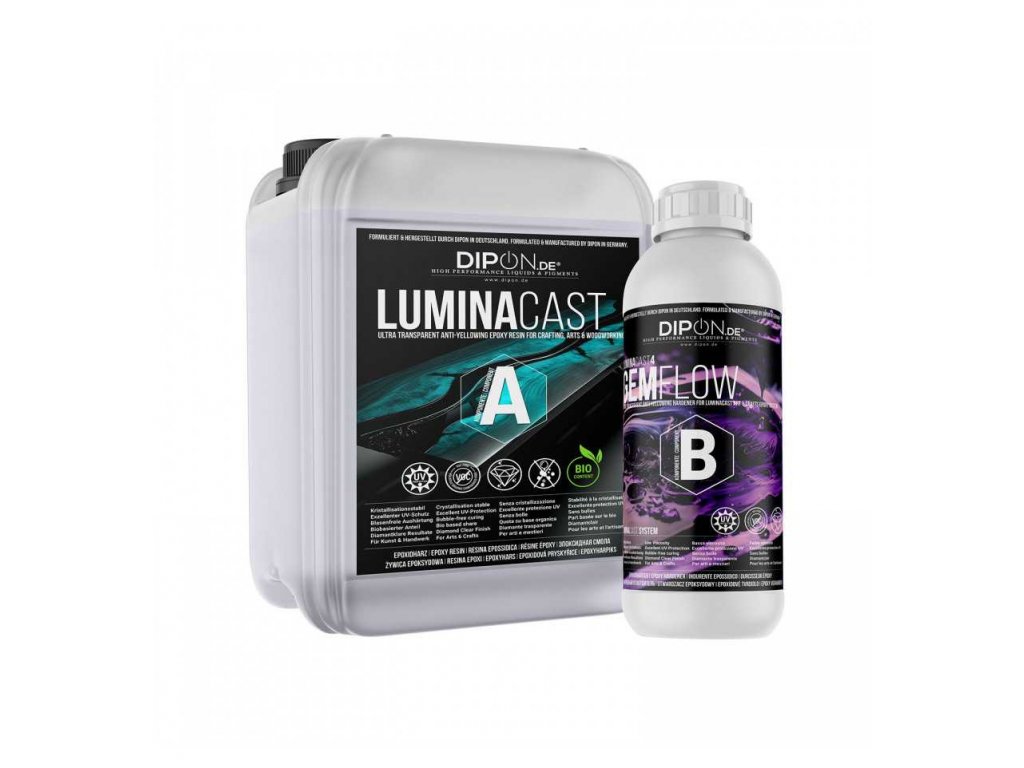 LuminaCast 4 Gem Flow LuminaCast 4 Gem Flow |
| Casting – medium pieces | low (fluid) | up to ~5 cm | 2–3 days | boards, lamps, clocks, coffee tables |  LuminaCast 8 Table Flow LuminaCast 8 Table Flow |
| Casting – large pieces (deep pour) | low (fluid) | 10–12 cm (up to 50 l) | 3–5 days | river and dining tables, headboards, doors | LuminaCast 9 Ocean Flow |
| Table Top / surface | medium | thin layers | 24–48 h | a glossy “glass” surface on slabs | Table Top |
| Art (paintings, geodes) | high (thick) | thin layers | system-dependent | epoxy paintings, geode art, colour effects | 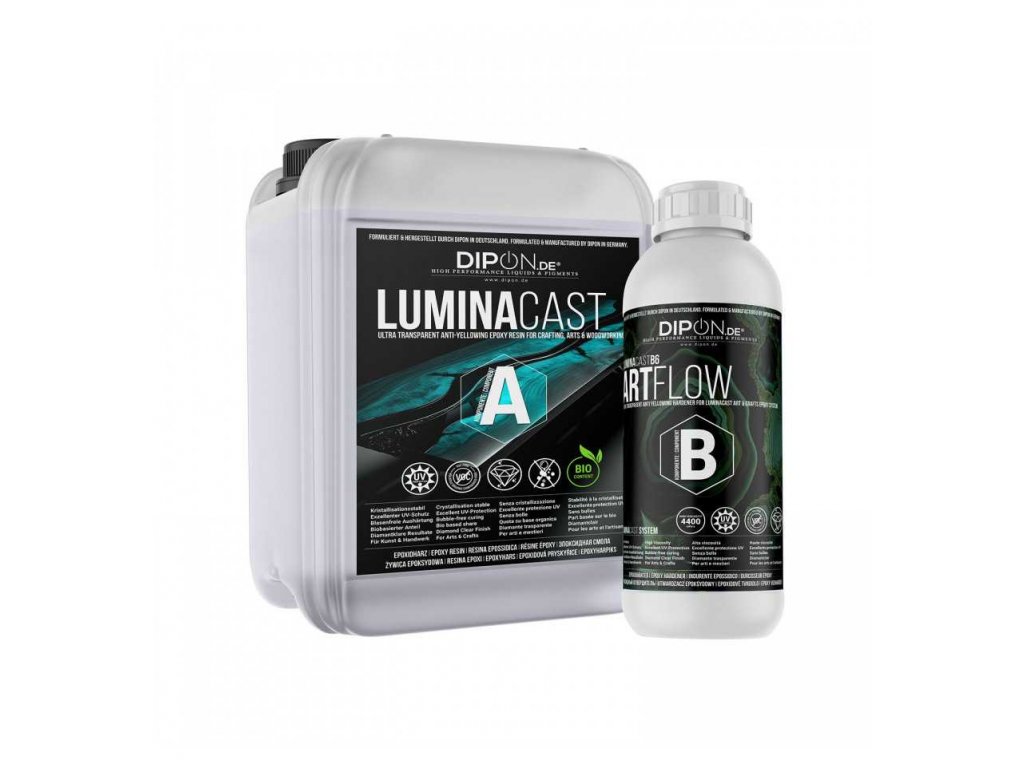 LuminaCast 6 Art Flow LuminaCast 6 Art Flow |
| UV resin | gel (1K) | thin layers | minutes (UV lamp) | small, thin jewellery, quick repairs | UV range |
Not sure? Browse epoxy resins by application or system-dependent.
How to choose an epoxy resin by casting size and project type?
The choice depends not only on the parameters, but also on the size of the casting. Each type places different demands on cure speed, layer height and mix volume.
Casting resins for small pieces
Jewellery, pens, coasters, pendants and small decorations. A very fluid consistency, fast cure (hours to a day) and a hard result ready for polishing. We recommend LuminaCast 4 Gem Flow.
Resins for medium castings
Serving boards, lamps, clocks, coffee tables and smaller furniture. Medium cure speed (2–3 days), layers up to ~5 cm, clear and dimensionally stable. A good choice is LuminaCast 8 Table Flow.
Casting resins for large pieces
River and dining tables, headboards, doors and large decorations. Low-viscosity systems with a long cure (3–5 days), pours up to 50 litres and 10–12 cm, and high resistance to overheating. The ideal choice is LuminaCast 9 Ocean Flow.
Table Top resins – thin layers and surface pouring
Coating wooden slabs and making tabletops with a glossy “glass” surface. Very good self-levelling, fast cure (24–48 h) and high resistance to scratches and moisture. See surface (table top) resins.
Art epoxy resins – paintings and geode art
Epoxy paintings, geode art and colour effects. A thicker consistency for working with pigments, an even cure, high clarity and minimal shrinkage. See resins for paintings and geodes.
Guides and advice from the blog
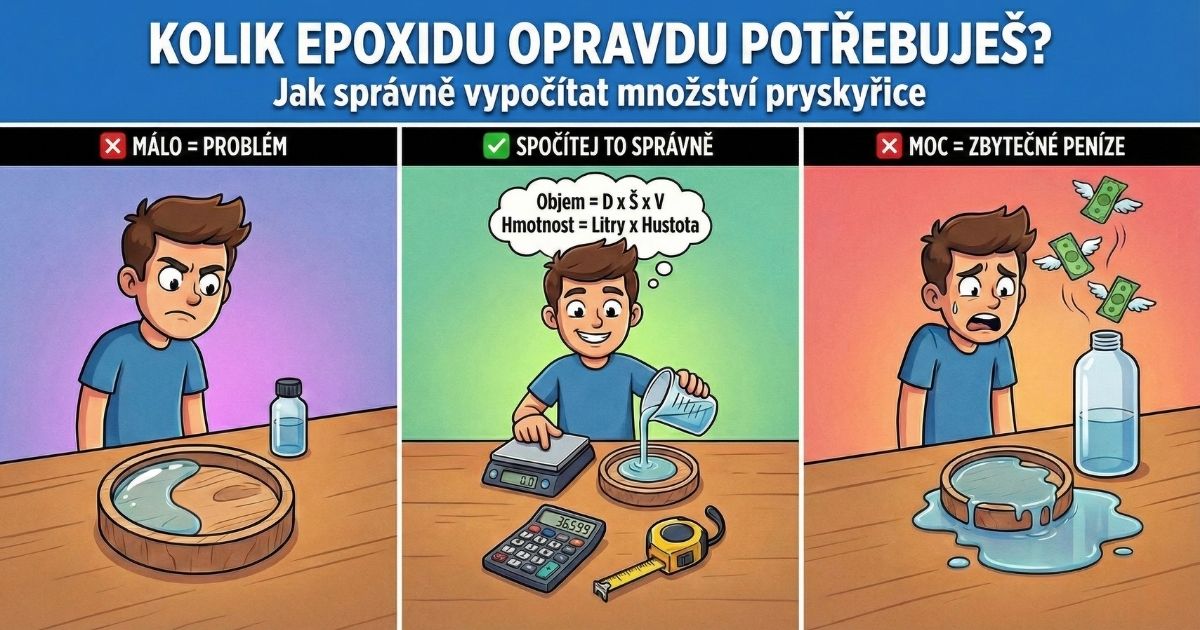 How to calculate the amount of epoxy resina calculator and how to work out the volume for your casting
 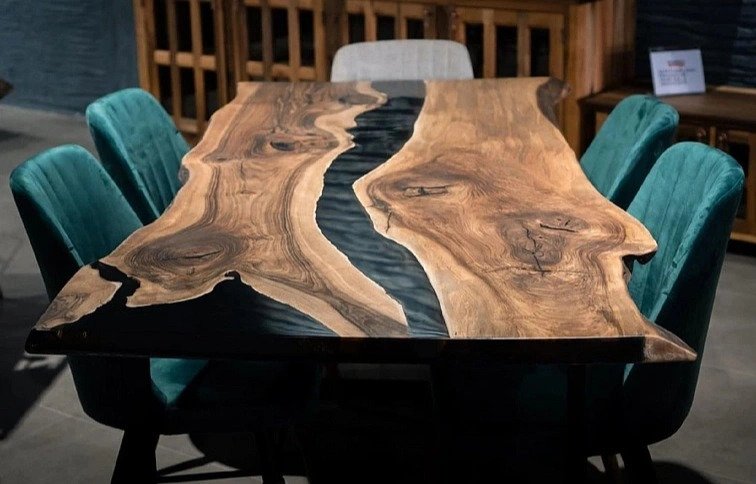 How to make an epoxy resin tablestep by step, from the slab to the final polish
FAQ – Frequently asked questions about epoxy resins
What is epoxy resin?
Epoxy resin is a two-component system (resin and hardener). Once mixed, it cures into a hard, durable and chemically resistant casting. It is used for tables, jewellery, floors and art projects.
Which epoxy resin should I choose for making a table?
For a river table, choose a low-viscosity casting resin with a long cure time (3–5 days) that allows large volumes (up to 50 L) and layers up to 10 cm without overheating — for example LuminaCast 9 Ocean Flow.
How do I prevent bubbles when pouring over wood?
Before the pour, use a sealing resin to close the pores in the wood. This stops air escaping and minimises the risk of bubbles in the main layer.
Can epoxy resin be coloured?
Yes — epoxy can be tinted with a wide range of compatible pigments, from powders through alcohol inks to metallic effects and pearlescent flakes.
Which resin is right for surface pouring?
For a thin “glass” layer over wood or resin, choose a table top resin. It is clear, self-levels well, cures quickly and is highly resistant to scratches and moisture.
Is epoxy resin safe for food contact?
Fully cured and certified, yes. The DIPON LuminaCast range is certified for food contact – suitable for serving boards and surfaces.
What is the ideal hardness of cured resin?
For most projects 72–80 Shore A is ideal. That range gives a good balance of hardness and flexibility – the resin doesn’t crack and machines well.
Which brand of epoxy resin should I choose?
DIPON LuminaCast offers the widest choice – one resin and 10 hardeners cover layers from millimetres to 10 cm. EpoxyPlast 3D specialises in deep pours, HoneyResin in art and top coat, and Den Braven Epoxin Dekor is an affordable option for hobby decorations up to 5 cm.
Which epoxy resin is best for large castings?
For layers of 5–10 cm, choose a specialist deep-pour system: LuminaCast 9 Ocean Flow (up to 10 cm, pot life up to 240 minutes) or EpoxyPlast 3D B100 UltraPour (up to 10 cm, cures from as low as 10 °C).
Not sure what to choose? We’ll advise you on the resin, the pigment and the process to suit your project.
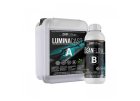
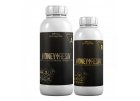


.jpg)
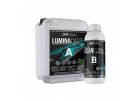


Product sorting
List of products


Clear casting epoxy resin for small castings, casting thickness 0.1–2 cm (at max. 22 °C), cures from 15 °C, hardness 83 SHORE D, VOC 0 g/L, mixing ratio 2:1 by weight, sandable...


Clear casting epoxy resin for small castings, casting thickness 0.1–2 cm (at max. 22 °C), cures from 15 °C, hardness 83 SHORE D, VOC 0 g/L, mixing ratio 2:1 by weight, sandable...