
Midori Green - Eye Candy Pigments
Code: 3975/000005 3975/000025 Choose variantRelated products

Product detailed description
Midori Green. Colour by day, light after dark.
Midori Green is a radiant green pigment from our Glow Series, standing out with its ability to glow in the dark. This pigment gives your projects a unique luminescent effect, whether you create with epoxy resin, acrylic paints or other media. Simply expose it to light to charge it, and it will then keep glowing for up to 8-10 hours.
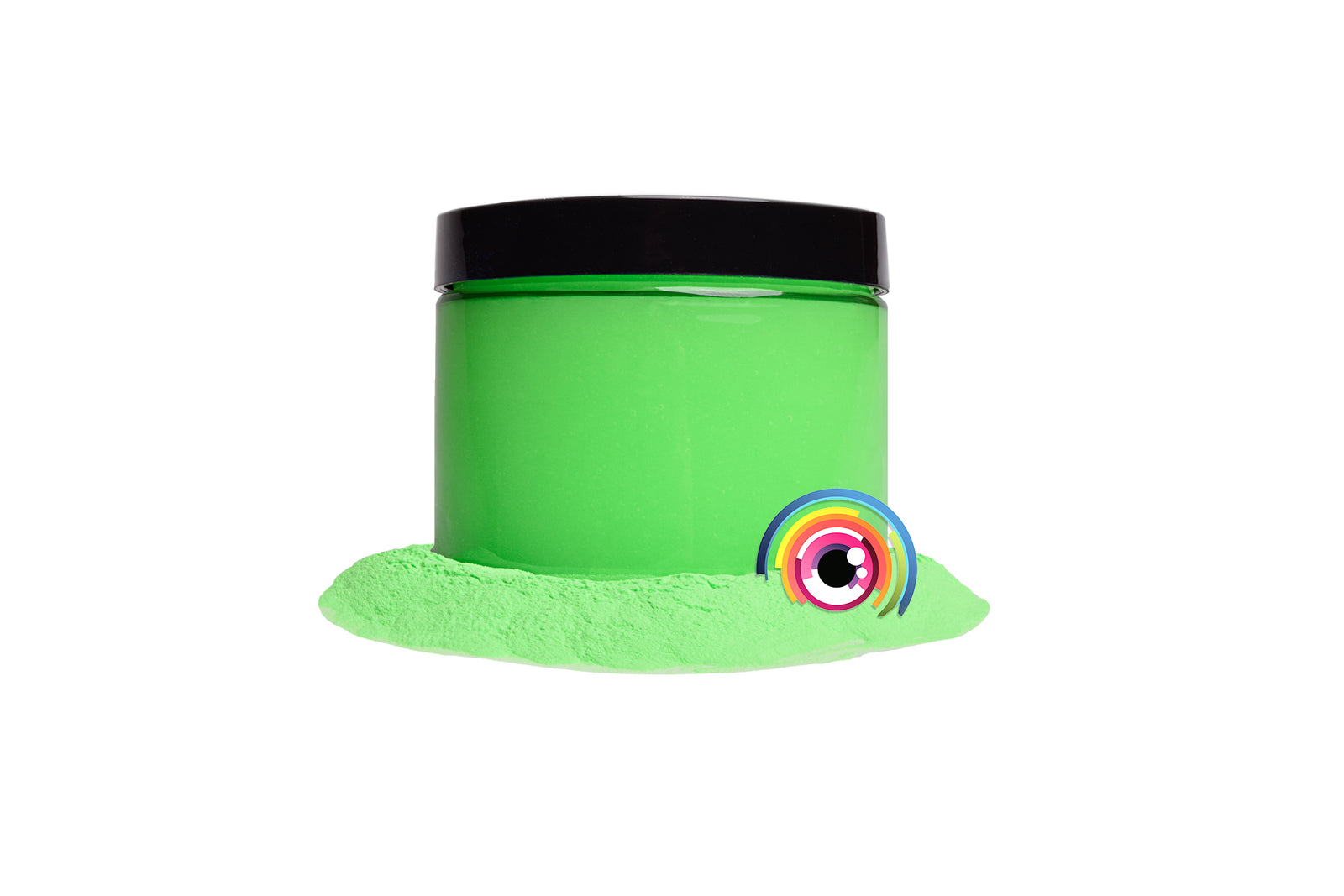

Colour by day, light after dark.
No photo editing — the photo itself alternates between both states. A full colour by day, light after dark. The pigment charges with daylight or UV light and gradually emits it in the dark. Hover to pause the transition.
- Real photos from the manufacturer's workshop
- The complete Glow in the dark series — all shades in stock
One pigment, four crafts.
Mica doesn't argue with the material — the same jar colours epoxy, soap base, wax and acrylic medium.

Resin: river tables, jewellery, pen blanks
0.5–1 g/kg for a translucent effect, ~3 g/kg for a full pearl. 30-50 μm particles stay evenly dispersed in the mix.

Soaps & candles
CP soap: 2 teaspoons per 450 g of oils. MP base: ½ teaspoon per 450 g. Candles: 5–10 % of the wax weight.

Acrylic pouring
~1 teaspoon per batch of pouring medium; disperse the pigment in varnish first. Also suitable for plastisol (fishing lures). The manufacturer does NOT recommend it for car paints — low UV resistance.
How much pigment for your project?
Doses from hands-on practice — start at the lower end, you can always fine-tune.
📋Dosage for other applicationsSoaps and candles and acrylics — the applications the manufacturer lists for this pigment, in one table▼
| Application | Dose | Note |
|---|---|---|
| Soap — cold process (CP) | 2 tsp / 450 g of oils | mix into part of the oil |
| Soap — MP base | ½ tsp / 450 g of base | disperse without lumps |
| Candles | 5–10 % by weight | according to the pigment's heat resistance |
| Acrylic pouring | ~1 tsp / batch of medium | disperse in varnish first |
| Car paints | NOT recommended by the manufacturer ("DO NOT USE") — low UV resistance | |
Values from the Eye Candy Pigments data sheet. For epoxy, our tested doses in the calculator above apply.
What the pigment may — and may not — be used for.
The manufacturer's FDA classification for this specific shade — with Eye Candy the statuses differ from colour to colour, so we state them honestly for each one.
- External cosmetic use (FDA)
- Eye area — shadows, liners (FDA) — NO
- Soaps, candles, epoxy, acrylics
- Lips and general ingestion — NO
- Bath bombs — NO
Midori Green is one of 307 colours.
Pearls, colour-shifting chameleons, glow-in-the-dark pigments, neon UV, flakes and pastes — we stock the entire Eye Candy range, sorted into 13 effect series with a guide that helps you pick the right one.
- Eye Candy effects guide — what each series can do
- The complete Glow in the dark series — all shades in stock
Midori Green in real projects
The manufacturer has 12 reviews · ⌀ 5.00★. We translate the quotes from English; the photos come directly from customers.
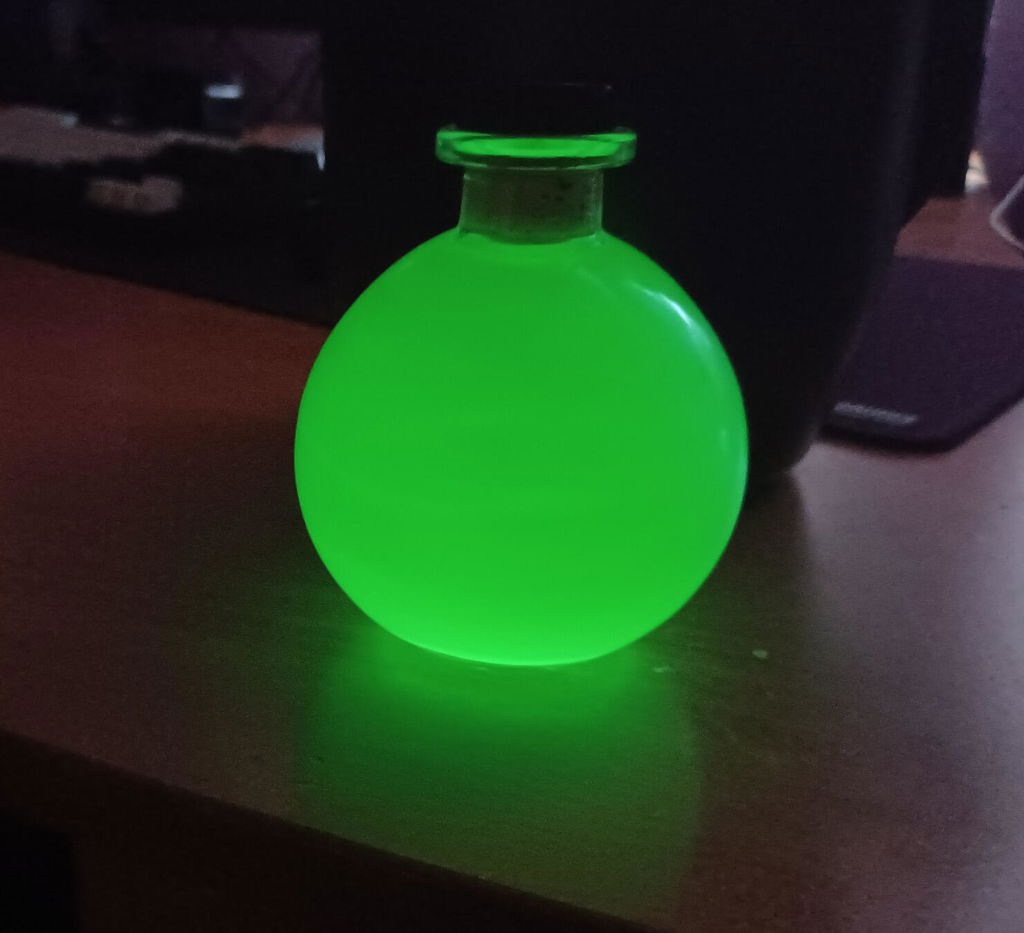
This glow powder really works! — „I make fun bottles with patterns in water. For years I tried in vain to make them glow — everything I tried sank to the bottom immediately. This powder finally did it.“
OzzyGeezer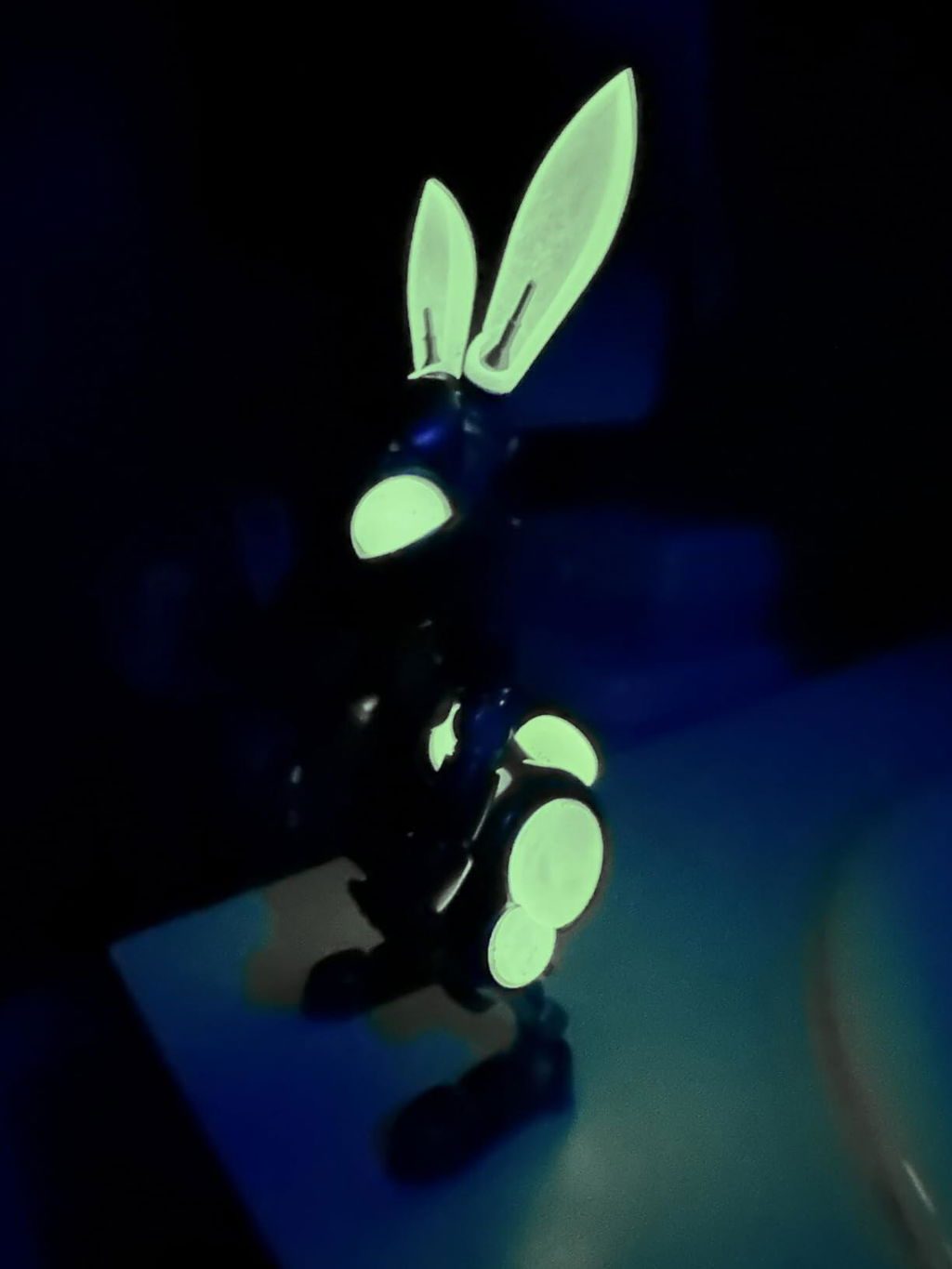
It glows beautifully and on its own it's a lovely colour — „Fantastic stuff. Usable straight from the jar — I added it little by little and no lumps in the resin. I cast parts for a 3D-printed model with it after terrible attempts with glow paint.“
David CMidori Green in action
Frequently asked questions
How much pigment should I add to epoxy?
From our hands-on practice: 0.5–1 g per kg of mix for a translucent effect (river, sea water), ~3 g/kg for full colour, 5 g/kg for opaque coverage. Always mix it into a small amount of resin first, then into the rest.
Will the pigment sink in a deep pour?
Midori Green has 30-50 μm particles that stay evenly dispersed in the mix. Only coarse pigments with 200–700 μm particles (e.g. flakes) can sink — letting the resin thicken slightly or stirring the mix during the process helps.
Which resin is it suitable for?
Any epoxy resin. For crystal-clear castings in which the pearl stands out, we recommend the systems DIPON LuminaCast — Ocean Flow for river tables, Gem Flow for jewellery.
How does the pigment charge and how does it glow?
A photoluminescent pigment charges with daylight or UV light. After dark it emits the stored light — the glow gradually fades and the pigment recharges with further exposure.
Does the glow effect work in epoxy?
Yes — it glows best in clear resin because the light passes through the whole casting. The higher the pigment dose, the richer the glow.
Is it suitable for car paint?
No — for this series the manufacturer explicitly advises against use in car paints ("DO NOT USE"): the pigments have low UV resistance. For car paints, go for the Solid Pearls pearlescent series or the Colorshift and Ultrashift series.
Additional parameters
| Category: | Glow in the Dark Powder |
|---|---|
| EAN: | Choose variant |
| ? Color / Shade: | Green Shades |
| ? Category: | Glow in the Dark |
| ? Particle Size: | 15-25 μm |
| ? Effect Type: | Luminescent |
| ? Form of supply: | Powder |
| ? Pigment Classification: | Inorganic |
| ? Substrate: | Phosphorus |
| ? Thermal stability: | ≤ 600°C |
| ? Series: | Glow in the Dark |


Product rating
Be the first who will post an article to this item!
Discussion
Be the first who will post an article to this item!