Saturn Yellow - Eye Candy Pigments
Code: 5376/000005 5376/000025 5376/000050 Choose variantProduct detailed description
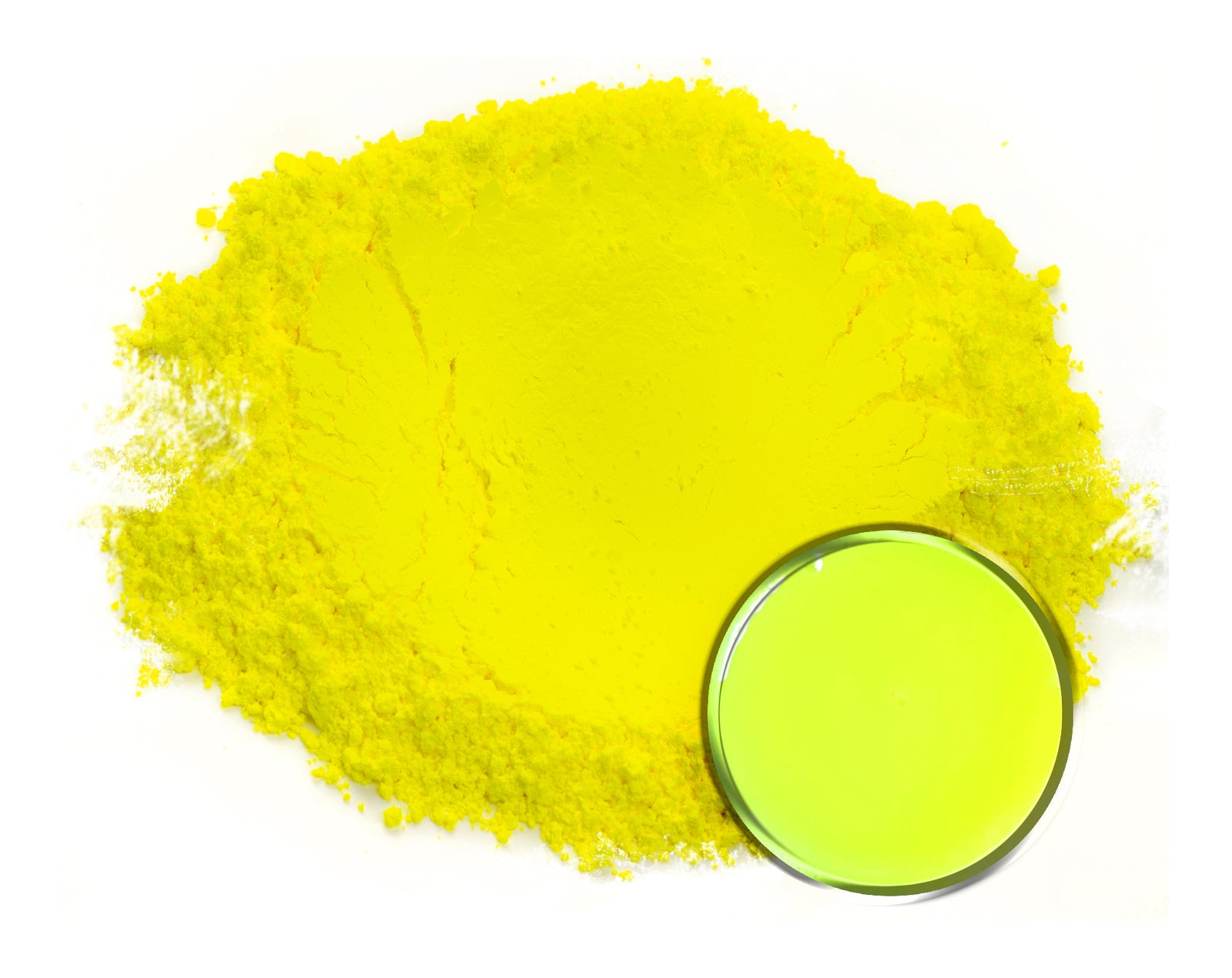
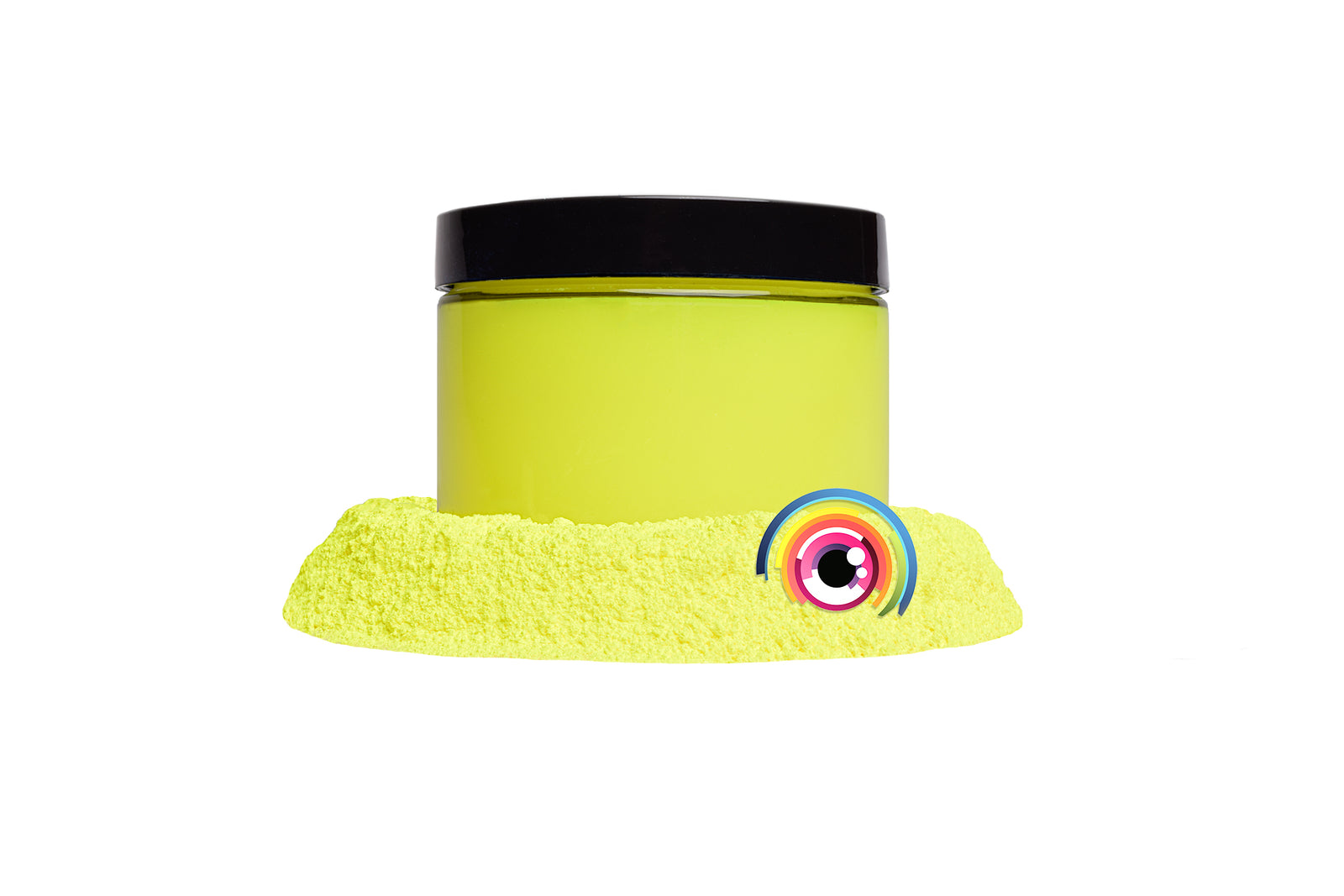
Saturn Yellow. A rich neon that blazes under UV light.
Saturn Yellow is a radiant yellow neon pigment that lights up every project with a bold, bright tone. This eye-catching shade from the Neon Series attracts attention and gives every artwork a unique, modern look. This popular mica powder is ideal for creative work, including use in epoxy resin, acrylic paintings or jewellery and cosmetics making.
One pigment, four crafts.
Mica doesn't argue with the material — the same jar colours epoxy, soap base, wax and acrylic medium.
Resin: river tables, jewellery, pen blanks
0.5–1 g/kg for a translucent effect, ~3 g/kg for a full pearl. 1-5 μm particles stay evenly dispersed in the mix.
Soaps & candles
CP soap: 2 teaspoons per 450 g of oils. MP base: ½ teaspoon per 450 g. Candles: 5–10 % of the wax weight.
Acrylic pouring
~1 teaspoon per batch of pouring medium; disperse the pigment in varnish first. Also suitable for plastisol (fishing lures). The manufacturer does NOT recommend it for car paints — low UV resistance.
How much pigment for your project?
Doses from hands-on practice — start at the lower end, you can always fine-tune.
📋Dosage for other applicationsSoaps and candles and acrylics — the applications the manufacturer lists for this pigment, in one table▼
| Application | Dose | Note |
|---|---|---|
| Soap — cold process (CP) | 2 tsp / 450 g of oils | mix into part of the oil |
| Soap — MP base | ½ tsp / 450 g of base | disperse without lumps |
| Candles | 5–10 % by weight | according to the pigment's heat resistance |
| Acrylic pouring | ~1 tsp / batch of medium | disperse in varnish first |
| Car paints | NOT recommended by the manufacturer ("DO NOT USE") — low UV resistance | |
Values from the Eye Candy Pigments data sheet. For epoxy, our tested doses in the calculator above apply.
What the pigment may — and may not — be used for.
The manufacturer's FDA classification for this specific shade — with Eye Candy the statuses differ from colour to colour, so we state them honestly for each one.
- External cosmetic use (FDA) — NO
- Eye area — shadows, liners (FDA) — NO
- Soaps, candles, epoxy, acrylics
- Lips and general ingestion — NO
- Bath bombs — NO
Saturn Yellow is one of 307 colours.
Pearls, colour-shifting chameleons, glow-in-the-dark pigments, neon UV, flakes and pastes — we stock the entire Eye Candy range, sorted into 13 effect series with a guide that helps you pick the right one.
- Eye Candy effects guide — what each series can do
- The whole Neon UV series — all shades in stock
Saturn Yellow in real projects
The manufacturer has 17 reviews · ⌀ 4.94★. We translate the quotes from English; the photos come directly from customers.
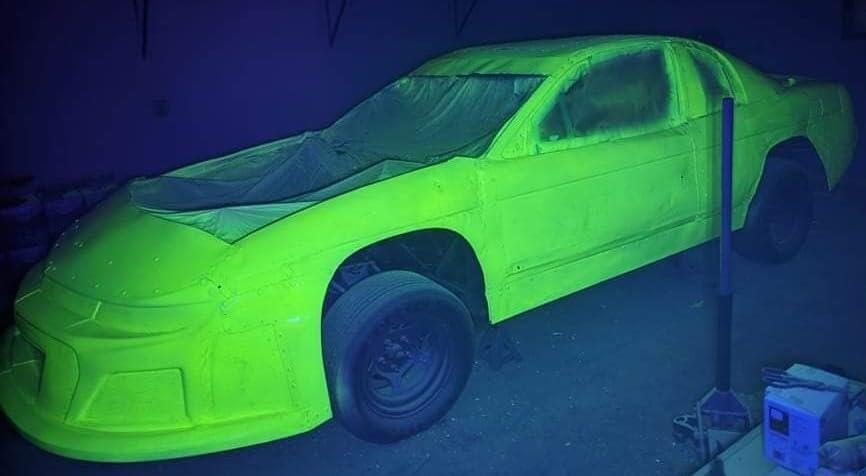
Wow, does it glow! — „We were looking for something really bold and Saturn Yellow hit the spot! Mixed at 25 g per gallon of automotive clear over a white base. Just make sure the base is cured and apply several light coats with enough drying time.“
Jordan J.
You'll want all the colours — „It fascinates me every time I mix it — every time like the first time. Not a single colour has disappointed me. Eye Candy is my first choice.“
Cari The Witch Next Door✔ verified purchaseSaturn Yellow in action
Frequently asked questions
How much pigment should I add to epoxy?
From our hands-on practice: 0.5–1 g per kg of mix for a translucent effect (river, sea water), ~3 g/kg for full colour, 5 g/kg for opaque coverage. Always mix it into a small amount of resin first, then into the rest.
Will the pigment sink in a deep pour?
Saturn Yellow has 1-5 μm particles that stay evenly dispersed in the mix. Only coarse pigments with 200–700 μm particles (e.g. flakes) can sink — letting the resin thicken slightly or stirring the mix during the process helps.
Which resin is it suitable for?
Any epoxy resin. For crystal-clear castings in which the pearl stands out, we recommend the systems DIPON LuminaCast — Ocean Flow for river tables, Gem Flow for jewellery.
Does the neon pigment glow in the dark on its own?
No — neon UV pigments are not photoluminescent. In daylight they give a rich neon colour and under a UV (black light) lamp they glow intensely; in complete darkness without a UV source they do not glow. For glowing in the dark, go for the Glow in the dark series.
Where does neon stand out most?
In clear resin, on a light background and anywhere UV light reaches — bars, party decorations, fishing lures or safety features.
Is it suitable for car paint?
No — for this series the manufacturer explicitly advises against use in car paints ("DO NOT USE"): the pigments have low UV resistance. For car paints, go for the Solid Pearls pearlescent series or the Colorshift and Ultrashift series.
Additional parameters
| Category: | Fluorescent & Neon Pigments |
|---|---|
| EAN: | Choose variant |
| ? Color / Shade: | Yellow Shades |
| ? Category: | Neon pigment |
| ? Particle Size: | 1-5 μm |
| ? Effect Type: | Fluorescent |
| ? Form of supply: | Powder |
| ? Pigment Classification: | Organic |
| ? Substrate: | Synthetic mica |
| ? Thermal stability: | ≤ 260°C |
| ? Series: | Neon |
Product rating
Be the first who will post an article to this item!
Discussion
Be the first who will post an article to this item!