
Table Top & Top Coat Epoxy Resin
Surface epoxy resins – also known as Table Top, Countertop nebo Top Coat – are self-levelling systems for a thin, clear final layer with a high gloss. They are applied over a finished surface: a table or bar top, a wooden panel, artwork or décor. They cure to a waterproof finish with maximum UV stabilisation that does not yellow.
They are not intended for deep pours – river tables and large castings call for casting (deep pour) resin. The two layers are typically combined.
Continue readingHide
In short: Top coat resins form a final layer a few millimetres thick. This category holds three ranges – Starbond ClarityPro (pure top coat, Shore D 85), DIPON HoneyResin (hard artwork layer, 1–6 mm) and DCS Resin (flexible layer for canvas and doming). For deep pours use casting resin; for kitchen and worktop surfaces we have a separate category.
What is a top coat and how does it differ from casting resin?
Top Coat (also called table top or countertop) is a thicker, faster-curing epoxy resin made for a thin final layer. Its higher viscosity keeps it on the panel instead of running over the edges, it levels itself and forms a clear, glass-like surface resistant to scratches, moisture and UV light.
By contrast, casting (deep pour) resin is low-viscosity, cures slowly and is poured to depths of several centimetres – used for river tables and large castings. When building a table the two roles complement each other: cast the body in casting resin, then seal the surface with a top coat.
Order of work: treat absorbent wood first with penetrating resin. It seals the pores that would otherwise release air during curing and form bubbles in the final layer.
Three ranges in this category
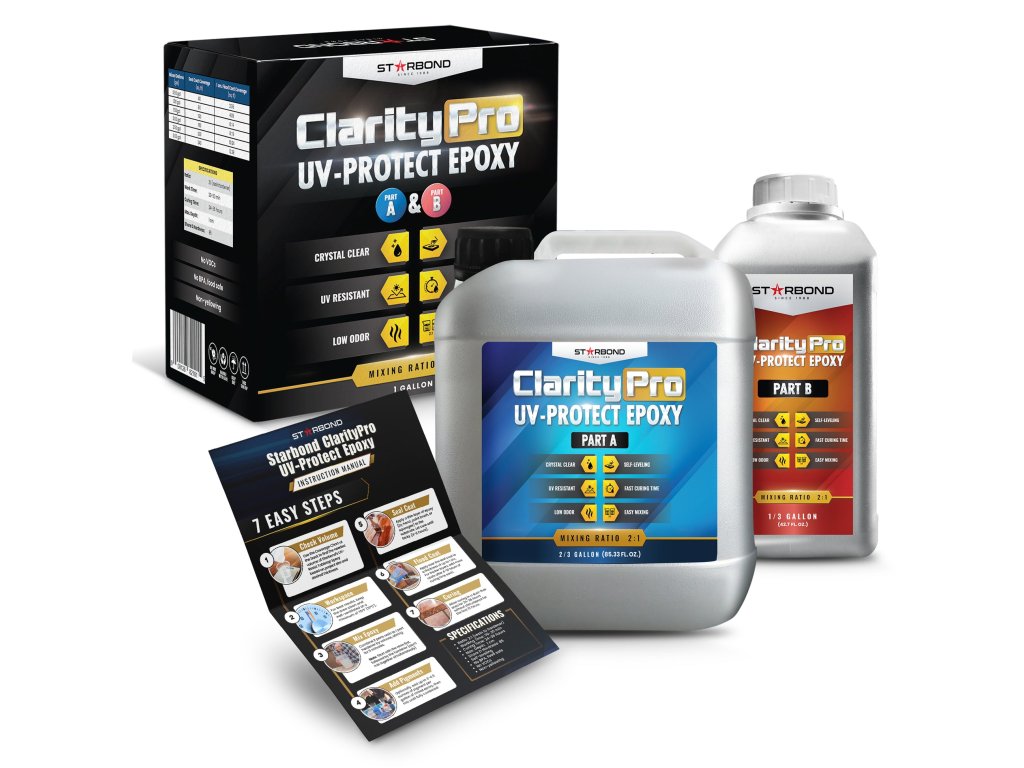 Starbond ClarityPropure top coat with UV-Protect
- Developed specifically as a final top coat layer
- Hard surface, Shore D 85
- UV-Protect – maximum resistance to yellowing
- Cures in 24–36 h, excellent self-levelling
- VOC and BPA free – almost odourless to work with
- Mixing ratio by volume 2:1 – demands accuracy
- 3.78 l and 11.36 l packs – better suited to larger areas
 DIPON HoneyResinhard artwork & top coat layer
- Layer of 1–6 mm in a single application
- High hardness, 89 ShD – tough, unyielding surface
- Maximum resistance to UV light
- High viscosity – stays on the panel, does not run off
- Packs from 1.5 to 30 kg – from a sample to a large commission
- Not for deep pours (6 mm max)
- Heat resistance 72 °C – not under hot cookware
 DCS Resin Doming & Sealingflexible pouring layer
- Flexible (hardness in the SHORE A range) – will not crack on a bending substrate
- Ideal for canvas, prints, stickers and doming
- VOC 0 g/l – free of volatile compounds
- Maximum resistance to UV light
- Working time 30 minutes
- Thinner layer, 1–4 mm
- Requires a workshop temperature of 17–22 °C
Specification comparison
| Specification | Starbond ClarityPro | DIPON HoneyResin | DCS Resin Doming & Sealing |
|---|---|---|---|
| Layer thickness | per manufacturer's instructions | 1–6 mm | 1–4 mm |
| Surface character | Hard (Shore D 85) | Hard (89 ShD) | Flexible (SHORE A) |
| Curing | 24–36 h | — | 30 min working time |
| Heat resistance | — | 72 °C | TG 49 °C |
| UV resistance | UV-Protect | Maximum | Maximum |
| Typical use | Table, bar and worktop surfaces | Table and bar tops, geodes, artwork | Canvas, prints, stickers, doming |
| Pack sizes | 3,78 l · 11,36 l | 1,5 · 3 · 7,5 · 15 · 30 kg | Sets by variant |
How to apply a top coat layer, step by step
- Prepare the substrate. Sand the surface (180–220 grit), remove all dust and degrease it. Seal absorbent wood.
- Bring resin and room to temperature, 17–22 °C. Cold resin levels poorly and holds bubbles.
- Measure precisely to the manufacturer's specification – by weight or measuring cup, never by eye. The wrong ratio leaves a permanently tacky surface.
- Stir slowly for 3–5 minutes, reaching the base and sides of the container. Fast stirring introduces air. Pour into a clean container and stir briefly again.
- Pour and spread with a squeegee into an even layer. Do not exceed the maximum thickness – a thicker layer overheats.
- Remove bubbles with a heat gun or bubble-removal spray, passing briefly from about 20 cm above.
- Cover and leave to cure in a dust-free environment. Full load only once the final hardness stated by the manufacturer is reached.
How much resin you will need
The calculation is simple: 1 m² at 1 mm thickness = 1 litre of resin. Multiply the volume by the density (roughly 1.1 kg/l for epoxy) and add a 10 % margin for residue in the container and for uneven surfaces.
| Area | 1 mm layer | 2 mm layer | 3 mm layer |
|---|---|---|---|
| 0.5 m² (bedside table) | 0.5 l | 1.0 l | 1.5 l |
| 1 m² (coffee table) | 1.0 l | 2.0 l | 3.0 l |
| 2 m² (dining table) | 2.0 l | 4.0 l | 6.0 l |
| 3 m² (bar counter) | 3.0 l | 6.0 l | 9.0 l |
Figures are indicative and exclude the margin. For the full method see our guide on how to calculate the amount of epoxy resin.
High gloss: glossy or matt finish?
Surface resins cure to a high gloss on their own – nothing needs polishing or over-coating. The gloss comes from the surface levelling itself, which is why a dust-free environment and a level surface are essential.
For a matt or satin look, sand the fully cured surface with fine abrasive (from 400 upwards) and buff with a matting compound. It does not work the other way round – a matted surface cannot be returned to full gloss without a fresh layer.
Light scratches in the cured surface can be sanded and buffed out; deeper damage is repaired by applying another thin layer.
Solving the most common problems
| Problem | Cause | Solution |
|---|---|---|
| Bubbles in the layer | Air from wood pores or from stirring | Seal the substrate, stir slowly, and after pouring pass over with a heat gun or bubble-removal spray |
| Permanently tacky surface | Inaccurate ratio or low temperature | Measure precisely, keep to 17–22 °C. An uncured layer has to be removed |
| Craters (fish eyes) | Grease or silicone on the substrate | Degrease; avoid silicone polishes in the workshop |
| Uneven gloss | Dust during curing | Cover the piece and work in a dust-free space |
| The layer did not level | Low temperature or too little material | Bring resin and room to temperature, keep to the minimum thickness |
| Yellowing | Layer too thick or constant sun exposure | Do not exceed the maximum thickness; choose a type with extended UV resistance for outdoor use |
More on tacky surfaces: why resin fails to cure.
Food contact and safety
Cured epoxy resin is inert and routinely used on dining and bar tops. What matters is that it is fully cured and mixed in the exact ratio – under-cured epoxy can release unreacted components.
If you need a surface for direct food contact (chopping boards, serving boards), choose a system with the appropriate food contact certification. Always ventilate and wear gloves while working; DCS Resin has VOC 0 g/l and Starbond ClarityPro is free of VOC and BPA.
Caring for the finished surface
- Clean with a damp cloth and a neutral detergent.
- Avoid abrasive powders, scouring pads and solvents (acetone, spirit) – they dull the surface.
- Always place hot cookware on a trivet, see the heat limits above.
- Do not cut directly on the surface – epoxy is tough, but not knife-proof.
- Restore gloss with an epoxy polish or by sanding and buffing.
Epoxy, lacquer or oil?
| Surface epoxy | Lacquer | Oil | |
|---|---|---|---|
| Layer thickness | 1–6 mm, tangible | Tenths of a mm | Soaks into the wood |
| Waterproofing | Complete, continuous film | High | Partial, needs renewing |
| Mechanical resistance | Highest | Medium | Low |
| Appearance | High gloss, glass-like | Gloss to matt | Natural, matt |
| Repairing damage | Sand and re-pour | Sand and re-lacquer | Easy, re-oil at any time |
| Suited to | Table and bar tops, artwork | Furniture, doors | Furniture with a natural look |
Typical use
Table and bar tops
A thin protective layer over a finished panel – high gloss, resistance to moisture and scratches. For the table body itself use casting resin.
Kitchen and worktop surfaces
A continuous waterproof film that is easy to maintain. For this purpose we have a separate worktop category.
Artwork, geodes and resin art
High viscosity holds its shape and lets you work with pigments and inks without the motif dispersing.
Canvas, prints and doming
Flexible DCS Resin encases a canvas or sticker in a clear dome that will not crack even on a bending substrate.
What to watch out for
- Place hot cookware on a trivet. A surface epoxy layer is tough but not heatproof – HoneyResin is rated to 72 °C.
- Do not apply a thicker layer than the manufacturer states. A thicker layer overheats and may yellow or crack.
- Watch the workshop temperature. Below 17 °C the resin levels poorly and curing takes longer.
- Always seal absorbent wood first – otherwise bubbles are likely.
- Measure precisely to specification, never by eye. The wrong ratio means a permanently tacky surface.
Guides to surface resins
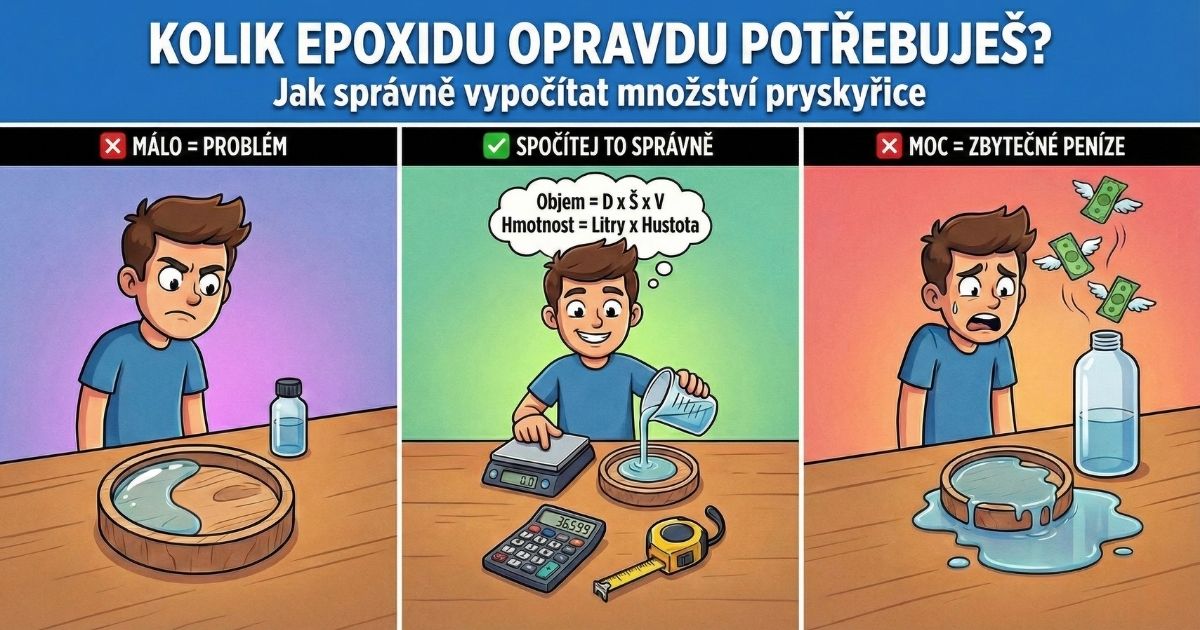 How to calculate the amount of resinhow much you need for a panel at a given layer thickness
  How to choose an epoxy resinviscosity, layer thickness and curing time in practice
  Why does resin fail to cure?tacky surfaces: causes and how to avoid them
FAQ – surface and top coat resins
What is top coat resin?
A top coat is an epoxy resin made for a thin, final surface layer. It has a higher viscosity than casting resin, so it stays on the panel, levels itself and cures to a clear, glossy surface with UV stabilisation. It is also known as table top or countertop resin.
What is the difference between table top and casting resin?
Table top resin is thick and intended for a thin layer of a few millimetres; casting resin is thin and intended for deep pours of centimetres to decimetres. Table top cures in hours, casting resin in days.
How thick a layer can I apply at once?
With DIPON HoneyResin the maximum is 6 mm per application, with DCS Resin 4 mm. A thicker layer overheats while curing, which can cause yellowing or cracks. If you need more thickness, apply the layer repeatedly.
How much resin do I need for a table?
The rule is 1 m² at 1 mm thickness = 1 litre of resin. So a dining table of 2 m² with a 2 mm layer needs roughly 4 litres plus about a 10 % margin.
Will the surface withstand a hot pan?
No. HoneyResin is rated to 72 °C, so always place hot cookware on a trivet. An epoxy surface resists mechanical wear and moisture, but it is not heatproof.
Is cured epoxy safe for food contact?
Fully cured epoxy resin is inert and routinely used on dining surfaces. The conditions are an exact mixing ratio and complete curing. For direct food contact, choose a system with the appropriate certification.
Will the surface yellow in the sun?
All three ranges in this category carry the maximum grade of UV resistance, so in normal indoor use the surface does not yellow. On permanently sunlit outdoor surfaces, expect a gradual shift in shade with any epoxy.
What can surface resin be coloured with?
You can use the full range of compatible pigments – powder pigments, pastes, alcohol inks and metallic effects. In thin layers dose the pigment sparingly so the clarity is preserved.


