
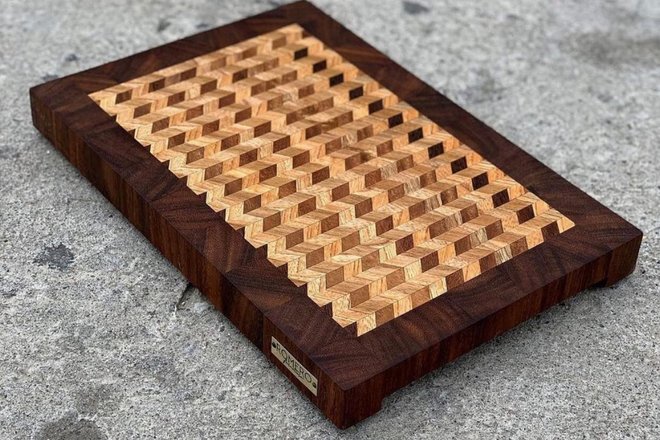
How to care for a cutting board
A wooden cutting board is in daily contact with water, knife and food. Without regular care it dries out, cracks and greys — but with the right treatment it will last for years and look like new.
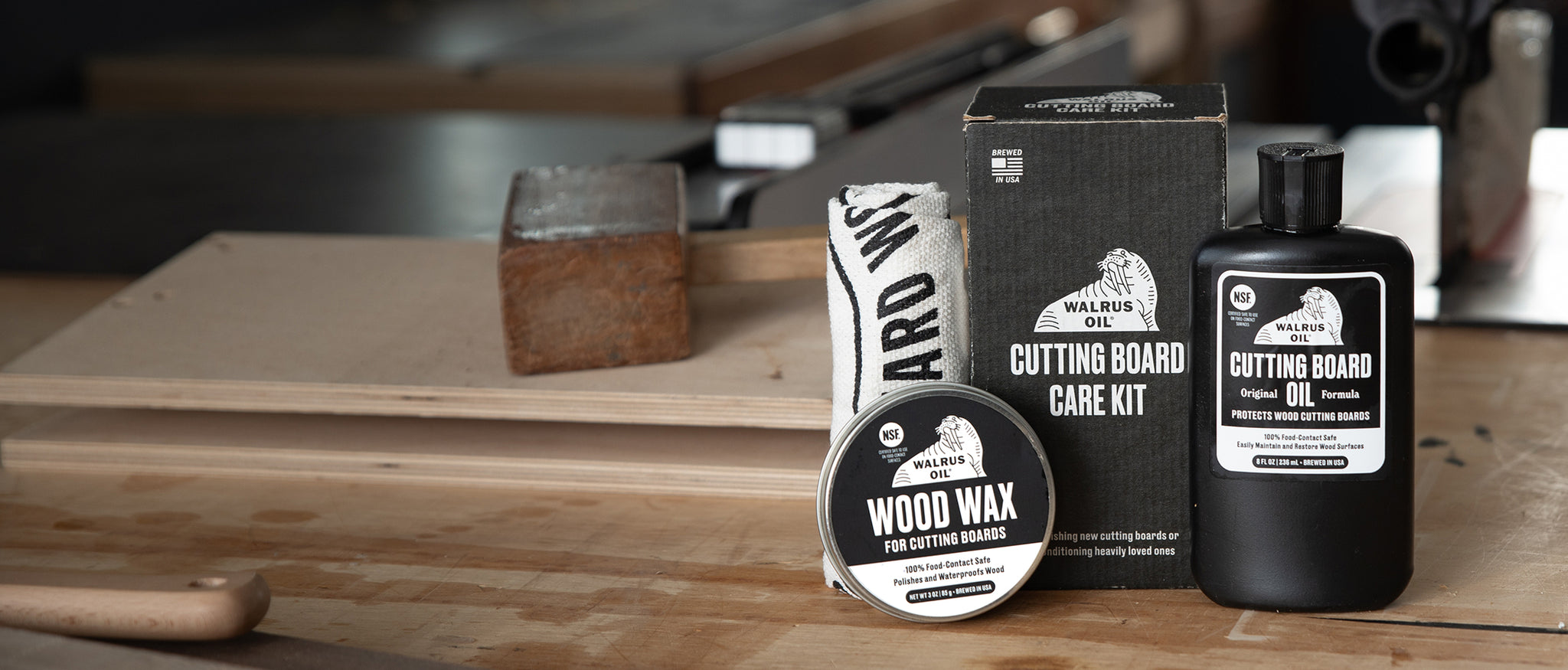
The key is simple: oil it and seal it with wax. The oil penetrates the wood and nourishes it from within, the wax then seals the surface against moisture. Cutting Board Oil and Wood Wax from Walrus Oil are food-safe (NSF certified), so you don't have to worry about using the board for food after treatment.
01Why oil a board
Wood is a natural material — it absorbs and releases moisture depending on its surroundings. An untreated board gets damp after every wash and dries out again, and over time it warps, cracks and the surface greys. Cutting Board Oil prevents this: it penetrates deep into the fibers, nourishes the wood from within and brings out its natural grain and color.
How to tell the board is asking for oil
- the surface is dry, grey or faded,
- the wood feels rough to the touch and the pores go “fuzzy”,
- water no longer soaks in evenly, forming maps,
- you start to see the first hairline cracks.
Which wood is best for a cutting board
Boards suit hard woods with fine pores — they stand up better to the knife and moisture and are easier to maintain. Oil-and-wax care is the same for all of them; they differ only in how fast they absorb oil.
| Wood | Properties | Care |
|---|---|---|
| Beech | hard, fine, affordable | ideal to start with |
| Oak | very durable, bold grain | pores absorb more oil |
| Walnut | dark, hard, premium | looks beautiful with oil |
| Maple | light, dense, hygienic | a favorite with butchers |
| Bamboo | hard (grass, not wood) | absorbs oil more slowly |
Board hygiene
Wood has natural antibacterial properties, but a few rules still pay off:
- for raw meat and vegetables ideally use two boards (or two sides),
- after use wash by hand with lukewarm water and dry it upright,
- natural refresh: rub with coarse salt and half a lemon, let it sit and rinse,
- an oiled board repels moisture → fewer bacteria and odors.
02First oil treatment

Cutting Board Oil is a 100% natural oil developed specifically for boards, utensils and cutting surfaces in contact with food. It contains no solvents, it deeply saturates the wood and is certified as food-safe (NSF).
- Wash the board and let it dry completely (ideally overnight).
- Sand a rougher or new board lightly with 220-grit paper and wipe off the dust.
- Apply a generous coat of oil to the whole surface and edges — by hand or with a cloth.
- Let the oil soak in for 6–12 hours.
- Wipe off the excess with a clean cloth — the surface should be silky, not greasy.
03Wax seal
The oil nourishes the wood, the wax seals it. Once the oil has dried, apply a thin coat of Wood Wax (beeswax and coconut based), let it sit for 15–30 minutes and buff off the excess with a cloth. You'll get a water-repellent barrier, a silky surface and a longer-lasting finish.
Cutting Board Oilnourishes the wood from within · food-safe (NSF)Buy ›  Wood Waxwax seal · beeswax + coconut · food-safeBuy ›
  Cutting Board Care Kitoil + wax + cloth in one set · save moneyBuy ›
Oil or wax? Best of all, both
| Cutting Board Oil | Wood Wax | |
|---|---|---|
| What it does | nourishes the wood from within | seals the surface, water-repellent |
| When | always first | after the oil has dried |
| Working time | 6–12 h to soak in | 15–30 min, then buff |
| Refresh | every few months | as needed, quick |
04Cleaning, washing and refreshing
Everyday washing: by hand, with lukewarm water and mild soap. Never soak the board or put it in the dishwasher.
When to refresh: as soon as the wood looks dry or faded. Wash the board, let it dry, sand out deeper nicks and apply a fresh coat of oil (and wax if needed).
- usually a refresh every now and then is enough, for heavily used boards every few months,
- regular care prevents cracking, drying out and premature wear.
Dirty board? Clean it gently first
Before you start oiling, clean the board gently. Instead of harsh chemicals, reach for a specialized cleaner — it removes grease, food residue and odors without drying out the wood or damaging the oil layer. After cleaning, let the board dry and touch it up with oil if needed.
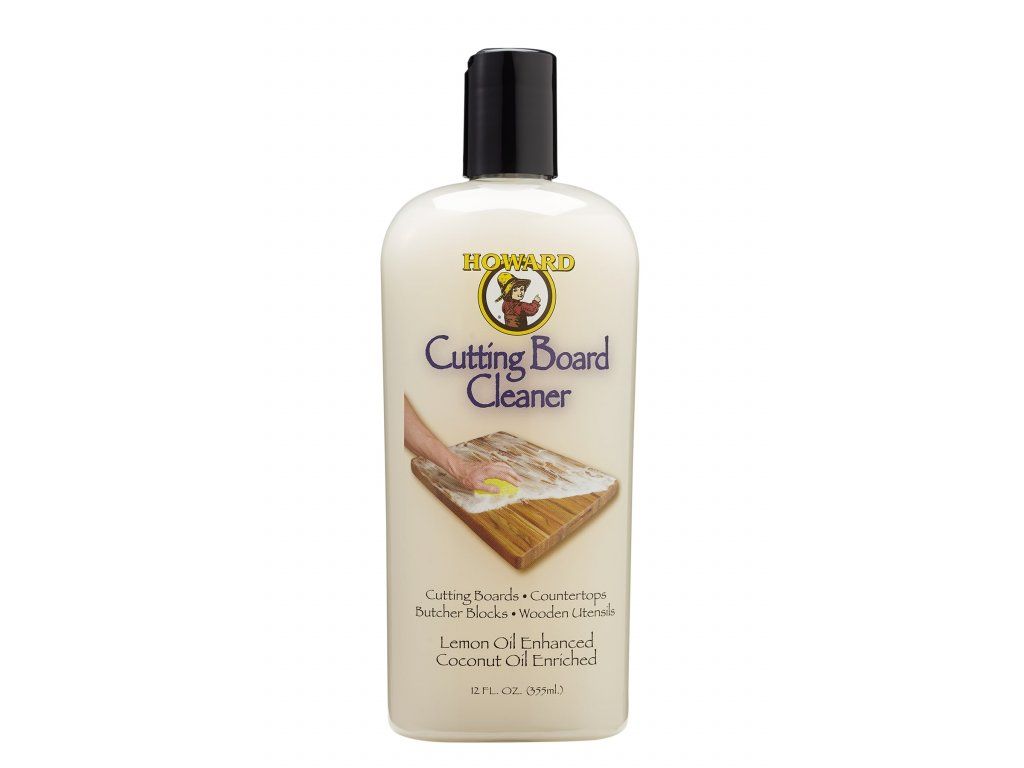 Howard Cutting Board Cleaner
Bonus: wooden handles and utensils
The same care benefits wooden knife handles and utensils. For those (and to protect blades against corrosion) Walrus Oil Knife Oil.
 Knife Oil
The board care cycle
Board care isn't a one-off — it repeats over and over. Here's what a healthy cycle looks like:
- 1
After each usewash by hand, dry upright
- 2
Once a weekcheck, top up with oil if needed
- 3
Every 1–2 monthsoil + buff with wax
- 4
As neededsand out nicks + oil
Step 3 · Every 1–2 months
Cutting Board OilOiling the wood — nourishes and protects from within, food-safe (NSF). Let it soak in for 6–12 h and wipe off the excess.Buy › Wood WaxSealing the surface with wax (beeswax + coconut) — adds a water-repellent barrier and a silky surface. Let it sit for 15–30 min and buff.Buy ›
Gallery: everything you can treat


- before oiling, wash the board and let it dry completely (the dirt comes off with Howard Cleaner),
- apply a generous coat of Cutting Board Oil, 6–12 h to soak in, wipe off the excess,
- a new board = 2 coats + 1–2 days curing,
- seal the surface with Wood Wax (15–30 min, buff),
- wash by hand with lukewarm water, refresh every few months — no dishwasher or soaking.
Choose your board care
Food-safe oils, waxes and sets from Walrus Oil for cutting boards and wooden dishes — all in one place.
Browse Walrus Oil kitchen careRelated products and categories
- Oil: Cutting Board Oil · Wax: Wood Wax
- Set: Cutting Board Care Kit · For knives and handles: Knife Oil
- Cleaning: Howard Cutting Board Cleaner
- Everything for the kitchen: Walrus Oil kitchen care
Related guides
- Blotchy finish after oiling? Causes and how to fix it
- Wood furniture care
- Everything about the Walrus Oil brand
Frequently asked questions (FAQ)
How often should I oil the board?
Oil a new board right away (2 coats), then refresh as soon as the wood looks dry or faded — for heavily used pieces roughly every few months.
Can I use a regular edible oil (olive, sunflower)?
We don't recommend it. Common kitchen oils go rancid and start to smell. Use an oil made for boards — Cutting Board Oil is natural, food-safe (NSF) and won't go rancid.
Do I have to use wax after the oil?
How should I clean the board so it isn't ruined?
By hand with lukewarm water and mild soap, or with the gentle Howard Cutting Board Cleaner. Avoid the dishwasher, long soaking and harsh chemicals — they dry out the wood.
Is the oil safe for food contact?
Yes. Both Cutting Board Oil and Wood Wax are certified food-safe (NSF), so once dry you can use the board for food without worry.
How long does the oil take to soak in?
Let it soak in for 6–12 hours, then wipe off the excess. On a new board apply two coats and let it cure for 1–2 days before use.