
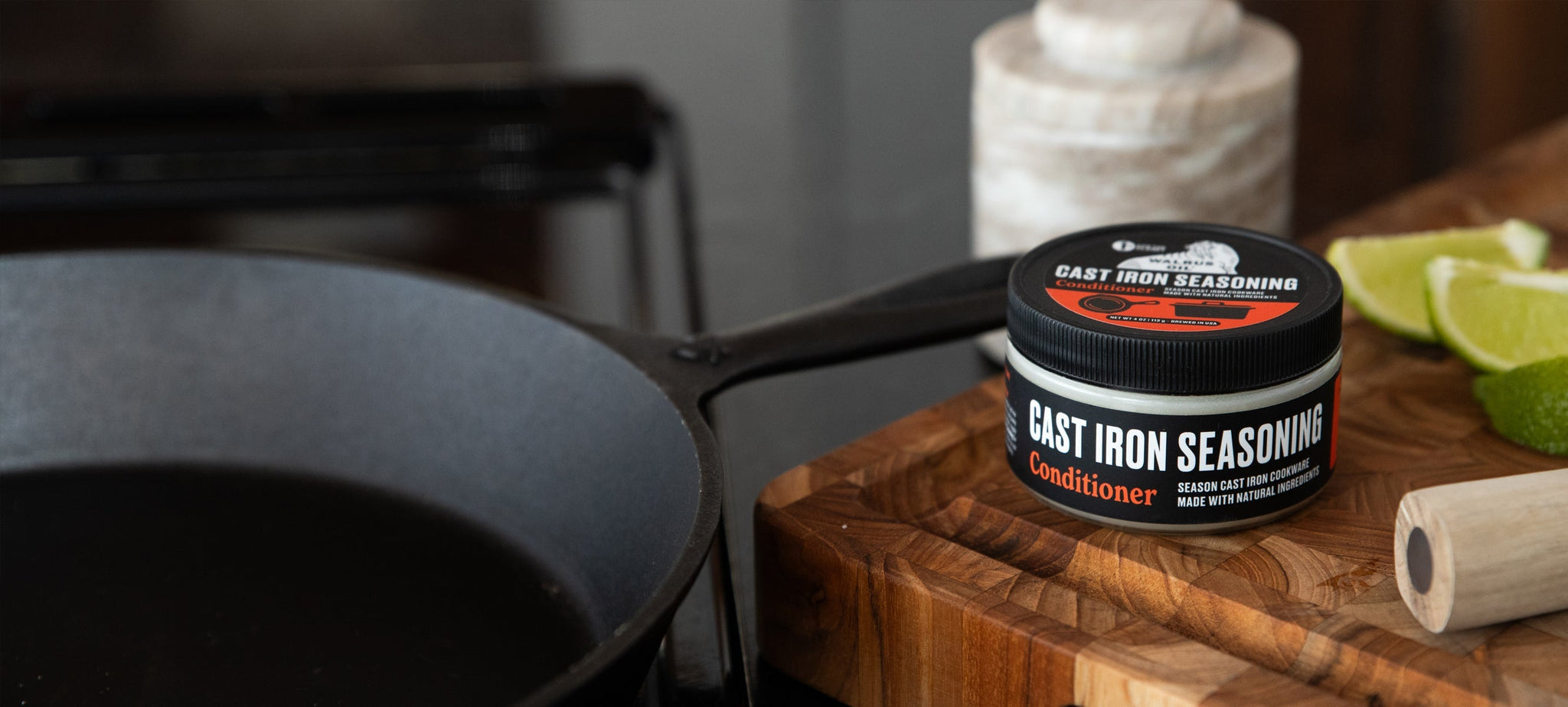
How to season a cast iron pan
Cast iron cookware holds heat, handles the stovetop, oven, grill and open fire and with every use it gets better, not more worn. But it all stands or falls on one thing: seasoning.
Without it, cast iron is just a porous metal that rusts and food sticks to it. With the right layer you get a smooth, naturally non-stick surface that lasts for years. Walrus Oil Cast Iron Oil is ideal for it — made from high smoke-point safflower oil, so it stands up to hot seasoning too.
01Why cast iron needs seasoning
Seasoning is a thin protective layer that bonds to the cast iron surface and protects it from rust. It gradually fills the metal's pores, creates a hard barrier and stops food from sticking. As the layers build up, you get a dark, smooth and non-stick surface. The key is consistency — with a new pan feel free to season after every use until the barrier forms.
02No-heat upkeep (quick)

Cast Iron Oil is a food-safe cast iron oil made from safflower oil with a high smoke point. For everyday protection and upkeep without the oven:
- wash the pan and dry it thoroughly (cast iron can't stand sitting in the damp),
- apply a thin coat of Cast Iron Oil over the whole surface until it's evenly covered,
- wipe off the excess — no standing oil must remain,
- with cast iron cookware repeat after every use and you gradually build up the protective layer.
03Hot seasoning (in the oven)

For a deeper, more durable layer (and when restoring neglected cast iron):
- clean the pan and the oven thoroughly (for smoke and safety reasons),
- preheat the oven well — Cast Iron Oil has a high smoke point, so it stands up to higher heat without much smoke,
- apply a thin coat of oil, wipe off the excess (no standing oil),
- place the pan upside down on the middle rack, put a drip tray below,
- bake for 30–60 minutes, then turn off the oven and let the pan cool down inside.
04Cast iron on the grill, rust recovery and safety
Cast iron on the grill and in the fire 🔥
Cast iron pans, griddles, pots and grill grates are the kings of summer grilling — they hold the heat, handle direct fire and give food that signature crust. That's all the more reason they need seasoning and rust protection, because outdoors they face damp and rain. After each grilling session, clean the cast iron, dry it and wipe it with Cast Iron Oil — before the season and after it.
How to restore rusted cast iron
- remove the rust (steel wool / fine sandpaper), wash the pan and dry it perfectly,
- apply a thin coat of Cast Iron Oil, wipe off the excess,
- do a hot seasoning (see step 03) — feel free to do it 2–3 times in a row until a dark barrier forms.
Tips and safety
- always apply thin, even coats — a thick layer gets sticky and doesn't cure well,
- after washing, dry the cast iron right away and lightly oil it so it doesn't rust,
- the non-stick builds up gradually — after a few applications food stops sticking,
- don't let the cast iron soak and don't put it in the dishwasher.
Bonus: care for knives, axes and tools
Corrosion protection benefits other metal in the kitchen and outdoors too. For knife blades, axes and wooden handles the ideal choice is Walrus Oil Knife Oil — it protects steel from rust and revives handle wood. (It's not meant for seasoning cast iron, but it perfectly rounds out the care of your tools.)
 Knife Oil
Which cast iron cookware to season
The process is the same for pans, griddles, woks, pots, cauldrons and grill grates. Anything made of bare cast iron benefits from regular seasoning.
Cast iron vs stainless steel vs teflon
| Cast iron | Stainless steel | Teflon | |
|---|---|---|---|
| Lifespan | generations (with care) | long | 1–3 years |
| Non-stick | natural, grows | low | high, while the coating lasts |
| Heat / grill / fire | yes, excellent | yes | no (damage) |
| Maintenance | dry + oil | easy | gentle, no scratching |
Storing cast iron over winter
Before putting grill and kitchen cast iron away for a while, wash it, dry it perfectly and wipe on a thin coat of Cast Iron Oil. Store it dry; put a paper towel between stacked pieces so they don't scratch. In spring the cookware is ready right away.
- the cast iron wash and dry it perfectly,
- apply a thin coat of Cast Iron Oil and wipe off the excess,
- quick upkeep = wipe after use, deeper layer = bake 30–60 min in the oven upside down,
- store grill cast iron dry and oiled,
- repeat until you get a dark, smooth non-stick surface.
Protect your cast iron
Cast Iron Oil from Walrus Oil — seasoning, rust protection and natural non-stick, food-safe. Ideal for grill cast iron too.
Browse Cast Iron OilRelated products and categories
- For cast iron: Cast Iron Oil
- For knives, axes and handles: Knife Oil
- All: Walrus Oil metal care and protection
Related guides
Frequently asked questions (FAQ)
How often should I season cast iron?
With a new or restored pan, feel free to do it after every use until a dark non-stick barrier forms. After that, just lightly oil it after washing and drying.
Can I wash cast iron with soap?
A little mild soap is fine — the myth that soap “ruins” seasoning is overblown. What matters is to dry the cast iron right away and lightly oil it. Just avoid long soaking and the dishwasher.
Does seasoned cast iron work on the grill and induction too?
Yes. Cast iron is great on the grill and open fire and works on induction too. After grilling, just clean it, dry it and wipe on Cast Iron Oil.
How do I remove rust from cast iron?
Take off the rust with steel wool or fine sandpaper, wash the pan and dry it perfectly, then apply Cast Iron Oil and do a hot seasoning (2–3 times in a row).
Why does food keep sticking?
The layer builds up gradually. Always apply just a thin coat, wipe off the excess and repeat the seasoning several times — after a few applications the surface becomes smooth and non-stick.