
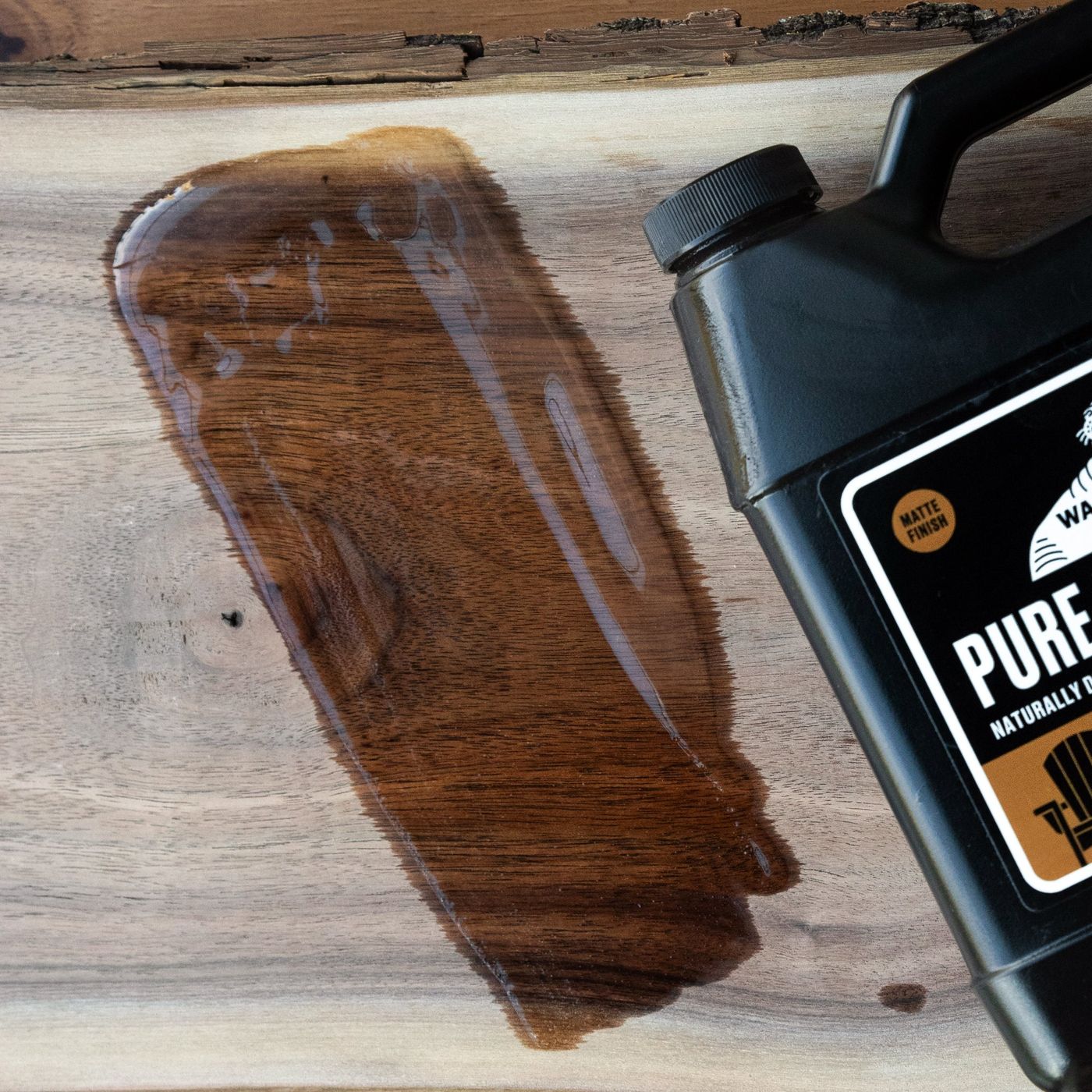
Tung oil vs. linseed oil for wood: which to choose?
If you are looking for a quality natural wood finish, you will probably come across two proven options – tung oil and linseed oil.
Both have been used for centuries to protect and enhance the beauty of wood, both penetrate deep into its structure, and once fully cured they are also suitable for surfaces that come into contact with food. Yet each offers different properties, advantages and methods of use – they differ in drying speed, water resistance, final appearance and ease of application.
In this article we compare their properties in detail and show you when to reach for tung oil and when linseed oil is the better choice.
Tung oil
Most water-resistant · warm amber tone
- Drying timedays–weeks
- Water resistancevery high
- Outdoor useyes
- Lookmatt–satin
- Best foroutdoors, wet surfaces

Linseed oil
Fastest-drying · soft golden tone
- Drying time~24 h
- Water resistancegood basic
- Outdoor userather not
- Looksatin
- Best forinterior, furniture
01Tung oil – the most water-resistant natural wood finish

Tung oil is obtained from the seeds of the tung tree, native to China and other parts of Asia, usually by cold pressing. It is known for its high content of polyunsaturated fatty acids, especially alpha-eleostearic acid, which polymerises on contact with air. As a result the oil gradually cures and forms a durable protective layer on the wood against water, dirt and wear.
Historically it was used to seal boats, finish furniture and protect wooden beams. To this day it remains one of the most sought-after natural oils where high durability and a natural wood look matter.
Drying time
Slower – dry to the touch after several days, full curing even weeks (100% natural, not heat-treated). It depends on:
- room temperature and air humidity,
- wood absorbency and amount of oil,
- number of coats and wiping off the excess.
Colour & sheen
A warm amber tone that enhances the grain and depth of the wood; after curing a matt to softly satin surface. Suitable when you want:
- a warmer, deeper wood tone,
- a natural look without a „plastic“ gloss,
- an elegant matt to satin surface.
Durability
High against water, chemicals and wear – handles the outdoors better than most natural oils. Ideal for:
- outdoor furniture, planters, barbecue accessories,
- wood outdoors and dining tables,
- heavily used surfaces and untreated floors.
Application
Thicker but smooth and easy to spread (less sticky than linseed). Work in a thin layer and wipe off the excess:
- sand and clean the surface,
- apply a thin coat, let it soak in,
- wipe off the excess, let dry, repeat if needed.
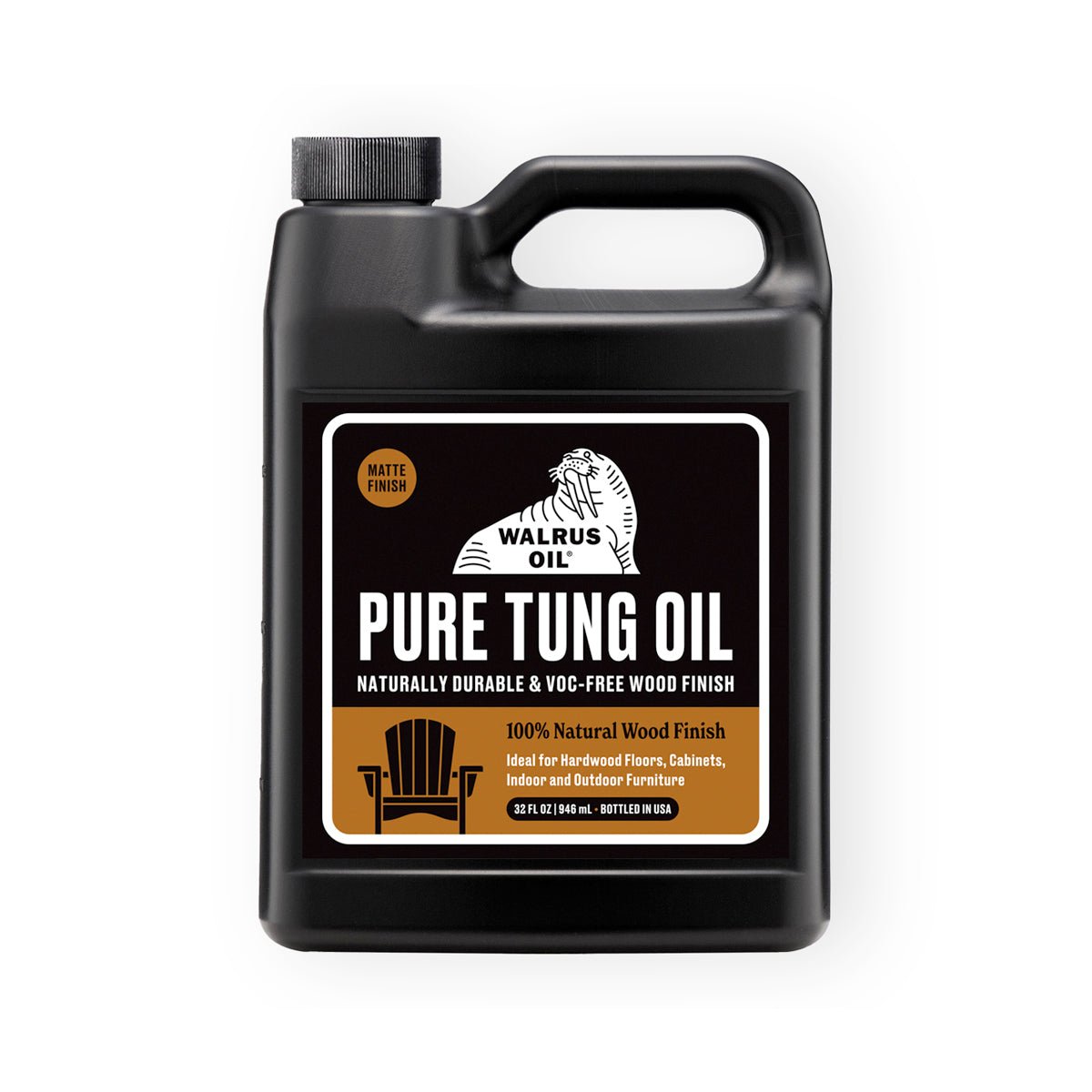
Walrus Oil Pure Tung Oil
- 100% natural tung oil, VOC-free
- deeply penetrates the wood and enhances the natural grain
- creates a durable polymerising protective layer
- ideal for floors, furniture, kitchen worktops and outdoor wood
02Linseed oil – the fastest-drying natural wood finish

Linseed oil is obtained from the seeds of common flax and has been used as a natural wood oil for thousands of years. It contains a high proportion of linoleic and alpha-linolenic acids, which polymerise on contact with atmospheric oxygen – similarly to alpha-eleostearic acid in tung oil. The oil thus gradually hardens on the surface and in the pores of the wood, forming a protective layer.
Polymerized Linseed Oil from Walrus Oil undergoes heat treatment that speeds up polymerisation – without potentially harmful metal accelerators or chemical drying agents. It therefore cures faster after application than ordinary raw linseed oil.
Drying time
Fast – dry to the touch within about 24 h. Ideal when you want to finish quickly and layer easily:
- faster project completion,
- easy application of multiple coats,
- no waiting days between steps.
Colour & sheen
Does not darken wood as much as tung oil – only a soft golden tone (most on light woods); a satin sheen after curing. Good for:
- indoor furniture, shelves, cabinets,
- decorative products and accessories,
- enhancing the grain without darkening.
Durability
Good basic protection, but less resistant to moisture and UV than tung oil. Best suited to interiors:
- furniture, cabinets and chests of drawers,
- decorations and interior panelling,
- less heavily used table surfaces.
Application
Thicker and stickier (due to pre-polymerisation) – spreads less easily and needs more careful working in. Buffing is key:
- apply with a pad or fine sandpaper,
- work the oil into the wood,
- buff thoroughly and wipe off the excess.
Walrus Oil Polymerized Linseed Oil
- 100% natural polymerised linseed oil, VOC-free
- quickly forms a hard protective layer and seals the pores of the wood
- enhances the naturally warm satin look
- heat-treated – no metal drying agents or chemical accelerators
03Comparison: tung vs. linseed oil
| Property | Tung oil | Linseed oil |
|---|---|---|
| Drying time | slower – days to the touch, full curing weeks | fast – dry to the touch ~24 h |
| Water resistance | very high | good basic |
| Outdoor use | yes – one of the best choices | rather not – mainly interior |
| Colour / tone | warm amber, more pronounced darkening | soft golden, darkens less |
| Sheen after curing | matt to softly satin | satin |
| Application | smoother, easy to spread | thicker / stickier, needs buffing |
| Best for | outdoor furniture, heavily used and wet surfaces | indoor furniture, shelves, decorations |
Both oils are suitable for surfaces in contact with food once fully cured – so the choice mainly depends on where and how demandingly the wood will be used.
04When to choose which?
If you are looking for a fast-drying natural oil for interiors, linseed oil is a very good choice. If you need maximum resistance to water, outdoor conditions and UV, tung oil will usually be the more suitable option.
- faster drying and the ability to layer coats more quickly,
- a more satin look and more subtle colouring of the wood,
- a natural finish for interiors.
- higher water resistance and better outdoor durability,
- protection for more heavily used surfaces,
- a deeper, warmer enhancement of the wood grain.
Choose your wood oil
Natural oils and waxes for interior and exterior wood finishing, all in one place.
Browse wood finishRelated products and categories
- Walrus Oil: Pure Tung Oil, Polymerized Linseed Oil
- Wood care: wood finish
Frequently asked questions (FAQ)
How long does linseed oil take to dry?
Polymerised linseed oil is usually dry to the touch within about 24 hours. Total curing, however, depends on temperature, humidity, the absorbency of the wood and the amount of oil applied.
Is linseed oil suitable for outdoor furniture?
Linseed oil can be used on various wooden surfaces, but for outdoor use it is not as durable as tung oil. For exteriors, garden furniture or wood exposed to water, it is better to choose a more durable oil finish.
Does linseed oil darken wood?
Linseed oil usually does not darken wood as much as tung oil. It can give it a soft golden tone, which is most visible on light woods and when several coats are applied.
Is polymerised linseed oil natural?
Walrus Oil Polymerized Linseed Oil is processed using heat. It contains no metal drying agents or chemical polymerisation accelerators, which makes it a natural choice for wood finishing.
Why is linseed oil thicker than tung oil?
With polymerised linseed oil, part of the polymerisation process has already taken place during heat treatment. As a result it dries faster, but at the same time has a thicker, stickier consistency that requires more thorough spreading and buffing.