
Plastic Pink - Eye Candy Pigments
Code: 5382/000005 5382/000025 5382/000050 Choose variantRelated products

Product detailed description
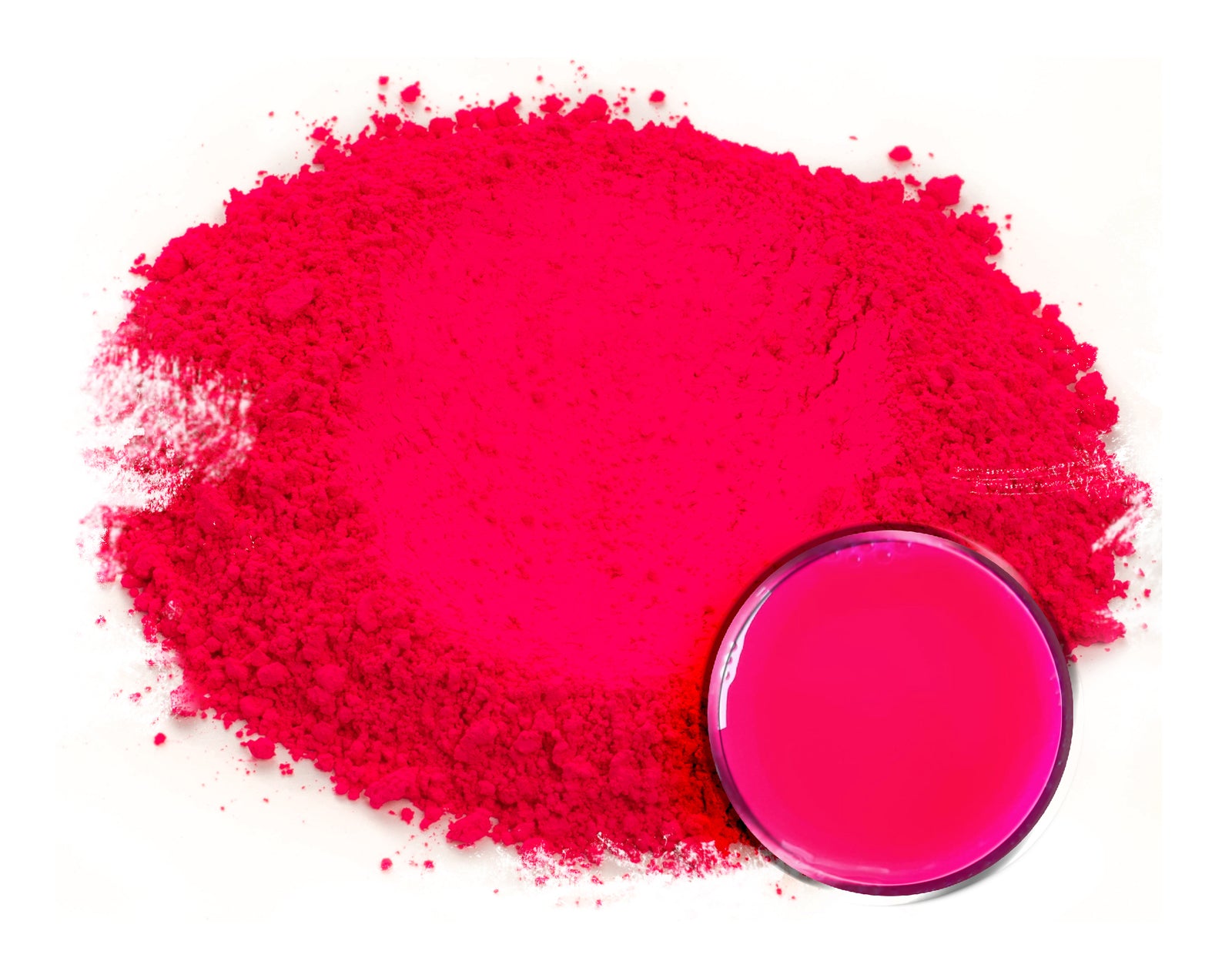
Plastic Pink. A rich neon that blazes under UV light.
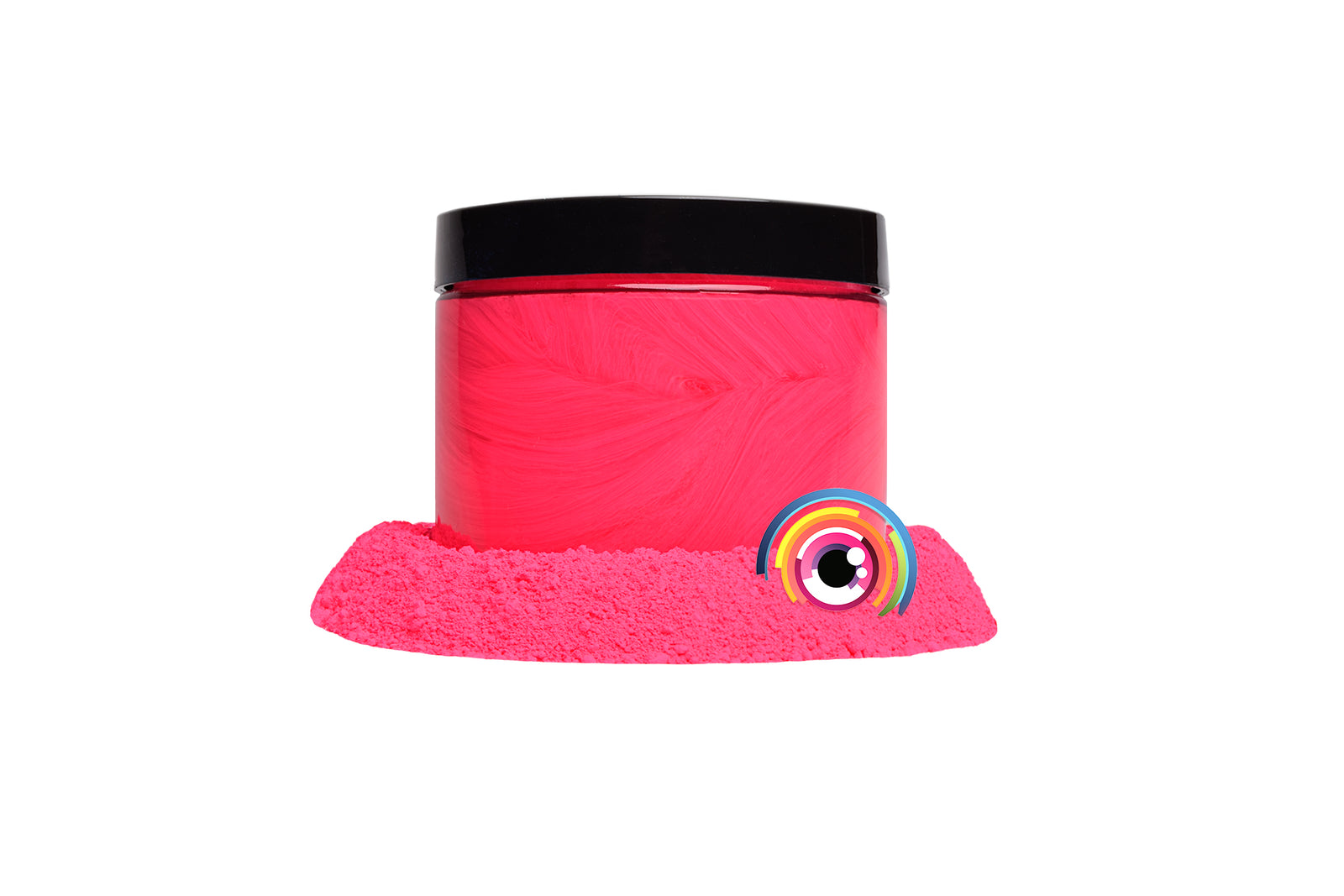
Plastic Pink is an extremely radiant pink neon pigment that gives every project a captivating touch. This striking mica powder is a great choice for anyone who wants their DIY projects to shine and attract attention. This pigment is ideal for a wide range of applications, including slime, homemade bath bombs and jewellery.
One pigment, four crafts.
Mica doesn't argue with the material — the same jar colours epoxy, soap base, wax and acrylic medium.
Resin: river tables, jewellery, pen blanks
0.5–1 g/kg for a translucent effect, ~3 g/kg for a full pearl. 1-5 μm particles stay evenly dispersed in the mix.
Soaps & candles
CP soap: 2 teaspoons per 450 g of oils. MP base: ½ teaspoon per 450 g. Candles: 5–10 % of the wax weight.
Acrylic pouring
~1 teaspoon per batch of pouring medium; disperse the pigment in varnish first. Also suitable for plastisol (fishing lures). The manufacturer does NOT recommend it for car paints — low UV resistance.
How much pigment for your project?
Doses from hands-on practice — start at the lower end, you can always fine-tune.
📋Dosage for other applicationsSoaps and candles and acrylics — the applications the manufacturer lists for this pigment, in one table▼
| Application | Dose | Note |
|---|---|---|
| Soap — cold process (CP) | 2 tsp / 450 g of oils | mix into part of the oil |
| Soap — MP base | ½ tsp / 450 g of base | disperse without lumps |
| Candles | 5–10 % by weight | according to the pigment's heat resistance |
| Acrylic pouring | ~1 tsp / batch of medium | disperse in varnish first |
| Car paints | NOT recommended by the manufacturer ("DO NOT USE") — low UV resistance | |
Values from the Eye Candy Pigments data sheet. For epoxy, our tested doses in the calculator above apply.
What the pigment may — and may not — be used for.
The manufacturer's FDA classification for this specific shade — with Eye Candy the statuses differ from colour to colour, so we state them honestly for each one.
- External cosmetic use (FDA) — NO
- Eye area — shadows, liners (FDA) — NO
- Soaps, candles, epoxy, acrylics
- Lips and general ingestion — NO
- Bath bombs — NO
Plastic Pink is one of 307 colours.
Pearls, colour-shifting chameleons, glow-in-the-dark pigments, neon UV, flakes and pastes — we stock the entire Eye Candy range, sorted into 13 effect series with a guide that helps you pick the right one.
- Eye Candy effects guide — what each series can do
- The whole Neon UV series — all shades in stock
Plastic Pink in real projects
The manufacturer has 13 reviews · ⌀ 5.00★. We translate the quotes from English; the photos come directly from customers.
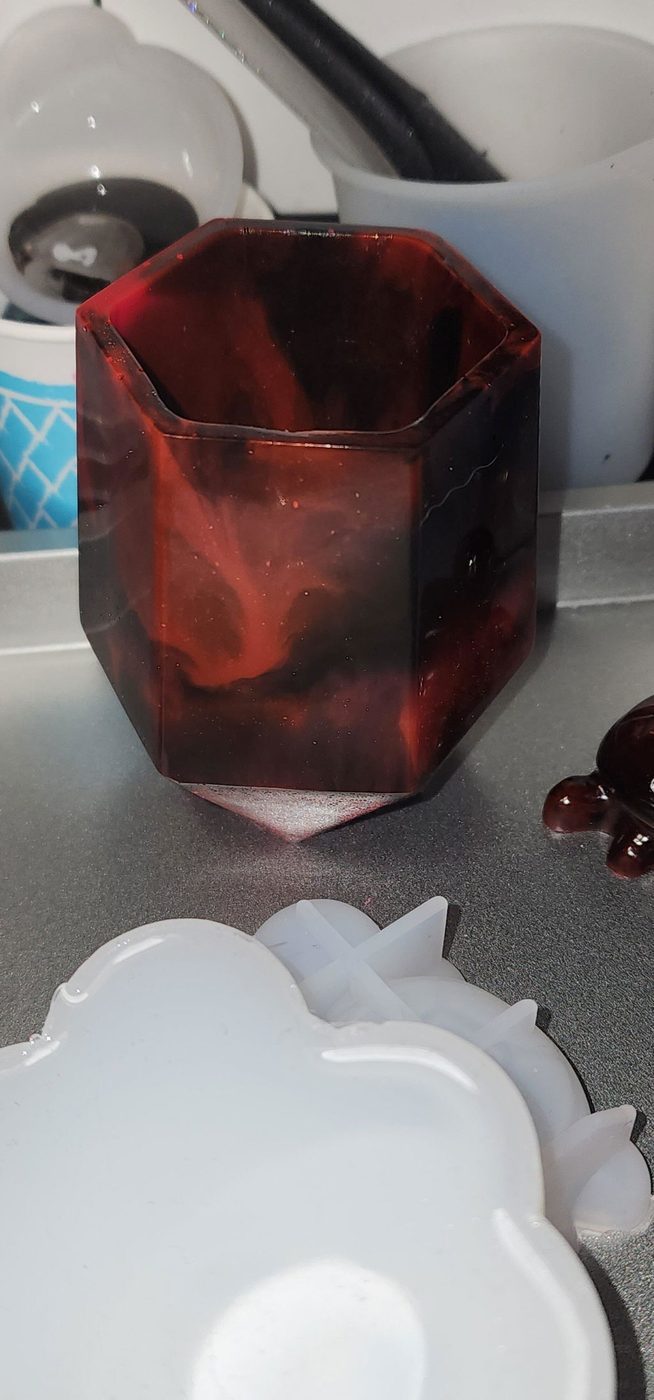
Love it!!! — „I was making a pen stand for a friend — she wanted the brightest pink with black. I mixed resin with Plastic Pink, poured it, sent photos… and she's absolutely thrilled! The pigment is highly saturated and mixes beautifully.“
Lee Osech✔ verified purchase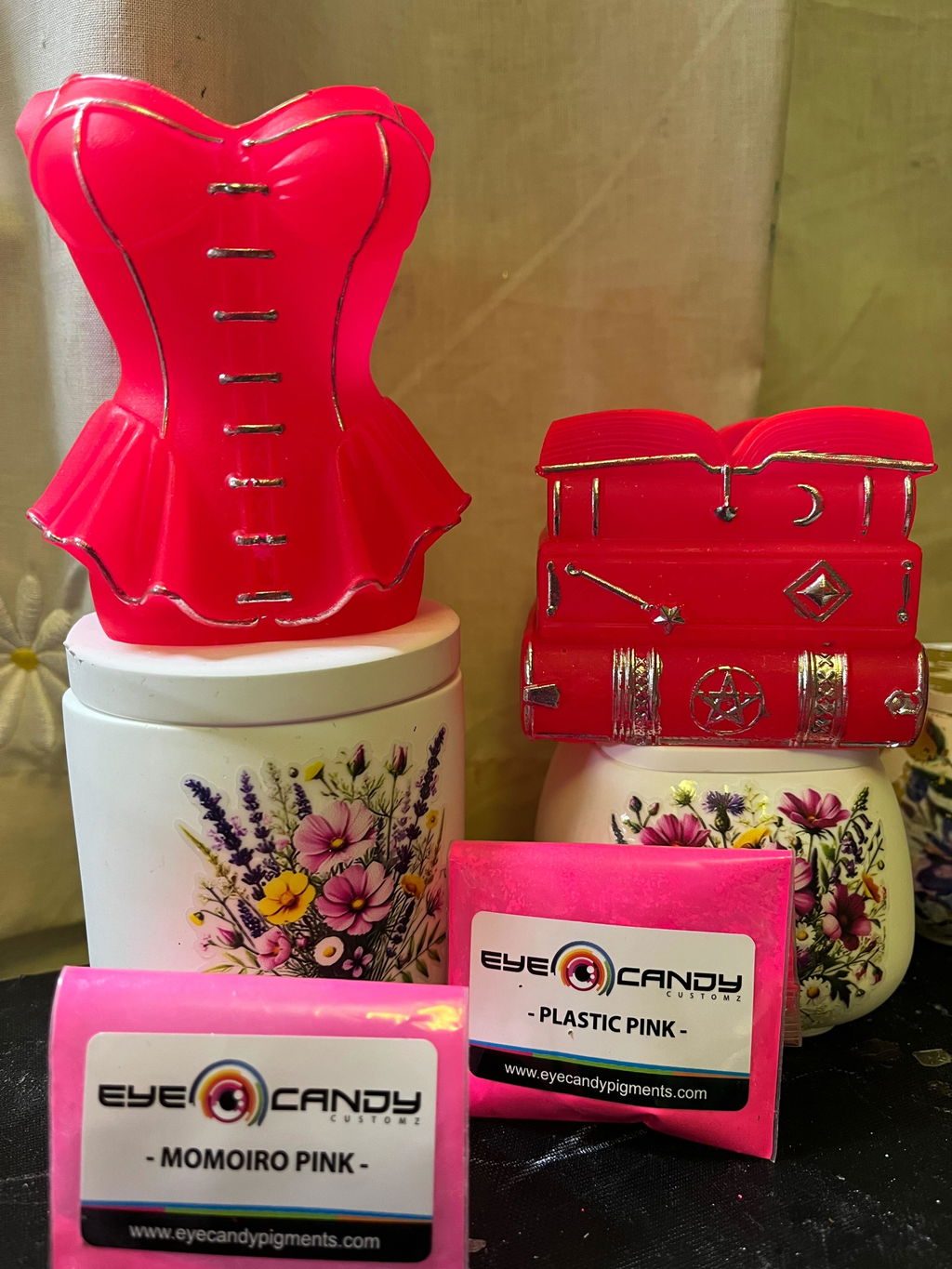
So vivid and beautiful!!! — „My granddaughter is absolutely thrilled with the pieces in this colour — and only a small amount was enough for such a vivid shade 🥰“
Karen✔ verified purchasePlastic Pink in action
Frequently asked questions
How much pigment should I add to epoxy?
From our hands-on practice: 0.5–1 g per kg of mix for a translucent effect (river, sea water), ~3 g/kg for full colour, 5 g/kg for opaque coverage. Always mix it into a small amount of resin first, then into the rest.
Will the pigment sink in a deep pour?
Plastic Pink has 1-5 μm particles that stay evenly dispersed in the mix. Only coarse pigments with 200–700 μm particles (e.g. flakes) can sink — letting the resin thicken slightly or stirring the mix during the process helps.
Which resin is it suitable for?
Any epoxy resin. For crystal-clear castings in which the pearl stands out, we recommend the systems DIPON LuminaCast — Ocean Flow for river tables, Gem Flow for jewellery.
Does the neon pigment glow in the dark on its own?
No — neon UV pigments are not photoluminescent. In daylight they give a rich neon colour and under a UV (black light) lamp they glow intensely; in complete darkness without a UV source they do not glow. For glowing in the dark, go for the Glow in the dark series.
Where does neon stand out most?
In clear resin, on a light background and anywhere UV light reaches — bars, party decorations, fishing lures or safety features.
Is it suitable for car paint?
No — for this series the manufacturer explicitly advises against use in car paints ("DO NOT USE"): the pigments have low UV resistance. For car paints, go for the Solid Pearls pearlescent series or the Colorshift and Ultrashift series.
Additional parameters
| Category: | Fluorescent & Neon Pigments |
|---|---|
| EAN: | Choose variant |
| ? Color / Shade: | Purple / Pink Shades |
| ? Category: | Neon pigment |
| ? Particle Size: | 1-5 μm |
| ? Effect Type: | Fluorescent |
| ? Form of supply: | Powder |
| ? Pigment Classification: | Organic |
| ? Substrate: | Synthetic mica |
| ? Thermal stability: | ≤ 260°C |
| ? Series: | Neon |


Product rating
Be the first who will post an article to this item!
Discussion
Be the first who will post an article to this item!