

Furniture Restoration Without Sanding: Reviving the Finish Step by Step
Dull, faded or lightly scratched furniture often doesn’t need sanding or refinishing: just clean it, bring back its original colour and shine with Restor-A-Finish, then protect it with wax. The original finish and the patina stay intact, and the job takes tens of minutes instead of days.
The method comes from the American manufacturer Howard, whose motto is “Restore It – Don’t Strip It!” – bring the old finish back to life instead of removing it. It works on lacquer, shellac, nitrocellulose lacquer, polyurethane and most other wood finishes. You’ll find all the products in the interior wood maintenance and renovation category.
01Restoring old furniture: revive or sand?
Restoration is enough when the original finish on the furniture is still intact – it has just faded, gone grey, turned dull or picked up minor flaws. Sanding and refinishing are only needed where the finish has worn through to bare wood. The same method works for restoring a chest of drawers, a chair, a table, a wardrobe or antique furniture.
| What you see | Solution |
|---|---|
| sun-faded surface, grey haze, dull colour | restore Restor-A-Finish in the wood’s shade |
| white rings from mugs and water marks | restore Restor-A-Finish with #0000 steel wool |
| fine scratches, oxidation, smoke stains | restore Restor-A-Finish, then Restor-A-Shine on high-gloss finishes |
| dulled high-gloss lacquer, fine scratches visible against the light | polish Restor-A-Shine |
| finish peeling, bare wood, deep gouges | sanding and a new finish restoration won’t be enough here |

02Step 1: clean the surface
Dust, grease and build-up must come off before restoring, otherwise the product will work them into the finish. Clean-A-Finish is a soap-based cleaner free of ammonia and bleach that copes even with furniture carrying years of build-up.

- Shake the bottle and test the cleaner on a hidden spot.
- Apply it to a soft cloth and clean the wood with the grain.
- Wipe dry with a second clean cloth.
Clean-A-Finish also cleans upholstery, carpets, lacquered surfaces, vinyl and plastics – so it’s handy for the rest of the interior too.
03Step 2: restore colour and shine – Restor-A-Finish
Restor-A-Finish penetrates the existing finish and permanently brings back its original colour and lustre without removing it. It contains a little stain, solvents and restoring oils, so it evens out faded spots, white rings, oxidation and fine scratches. Antique restorers have used it for decades because it preserves the patina.
Which shade to choose
Choose the shade that best matches the furniture’s finish. If in doubt, go a little lighter.
| Wood tone | Restor-A-Finish shade |
|---|---|
| light wood | Neutral |
| light brown (maple, pine) | Maple-Pine |
| golden brown (oak) | Golden Oak |
| light reddish (cherry) | Cherry |
| medium brown (walnut) | Walnut |
| dark reddish (mahogany) | Mahogany |
| medium dark | Dark Walnut |
| dark brown | Dark Oak |
| blackish brown | Ebony Brown |
Method
- Test on a hidden spot – check the shade, how fast it soaks in and whether a cloth is enough or you need steel wool.
- Apply with a small pad of cloth, always to a small area at a time. Don’t pour the product directly onto the furniture.
- Wipe dry straight away. Faded, dried-out finishes only need wiping; others need more work or a longer contact time.
- White rings, oxidation and fine scratches: go over them with a pad of 0000 steel wool (the finest) dipped in Restor-A-Finish – lightly and always with the grain until the flaw blends in. Test how much pressure to use on a hidden spot.
- Carved areas: treat them with a small brush or soft-bristled brush and wipe off.
- Always wipe off the excess and check the result as you go.

What you’ll need for restoration
A cleaner, a restorer in your wood’s shade and fine steel wool for the flaws:
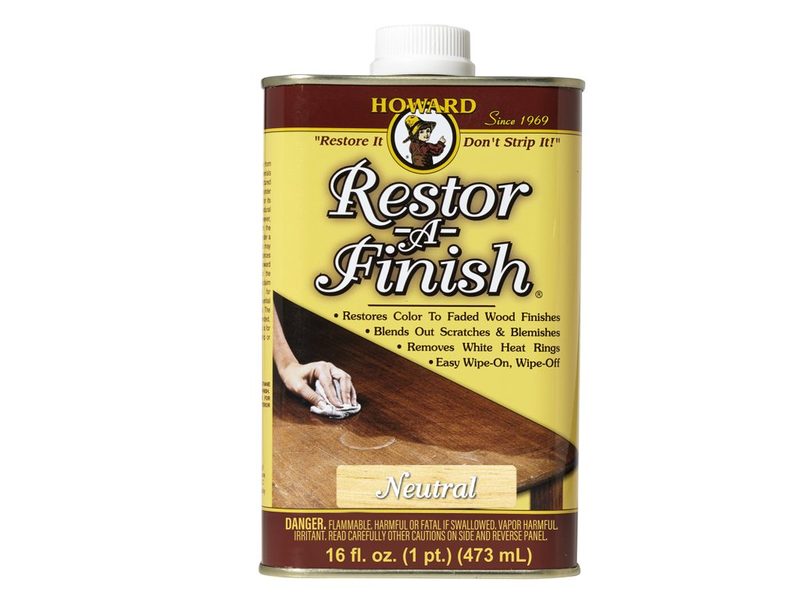 Restor-A-Finishrestores colour and shine · 9 shades · 473 mlView ›
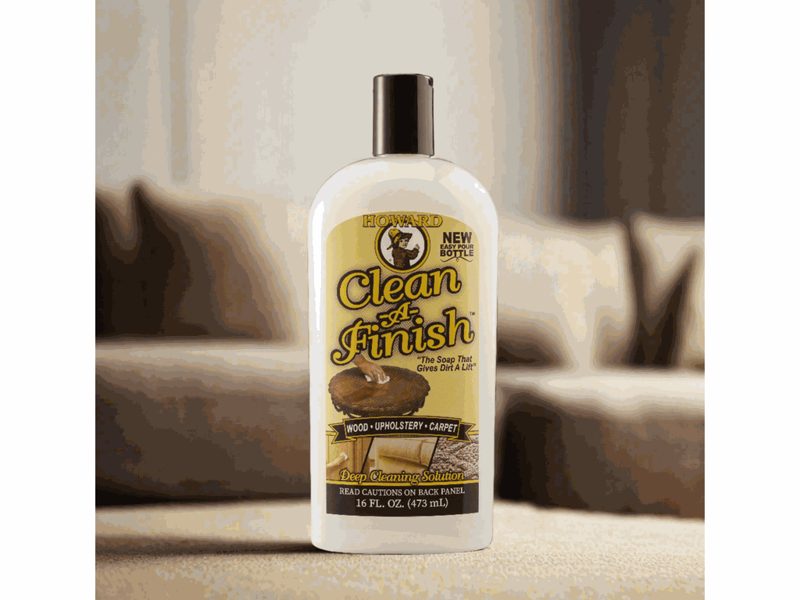 Clean-A-Finishcleaning before restoring · no ammonia or bleachView ›
 Super Fine Steel Woolwhite rings and scratches · #0000 · 8 pcsView ›
04Step 3: bring back a high gloss – high-gloss finishes only
Steel wool can dull a high-gloss finish and leave fine swirl marks. Restor-A-Shine is a polishing paste with very fine abrasive particles that buffs them out – along with scratches, haze and dull spots on high-gloss polyurethane, lacquer, nitrocellulose lacquer and shellac. It won’t lift veneer and contains no silicone.

- The surface must be clean – dust would scratch it.
- Shake and apply a generous amount to the surface or a soft cloth.
- Polish in circles, then with the grain, until the shine returns. Don’t polish through the finish to the wood.
- Residue: wipe off with a clean cloth or with Orange Oil or Lemon Oil.
Restor-A-Shine can be applied by hand or with an electric buffer – ideal for table tops, bar counters and pianos.
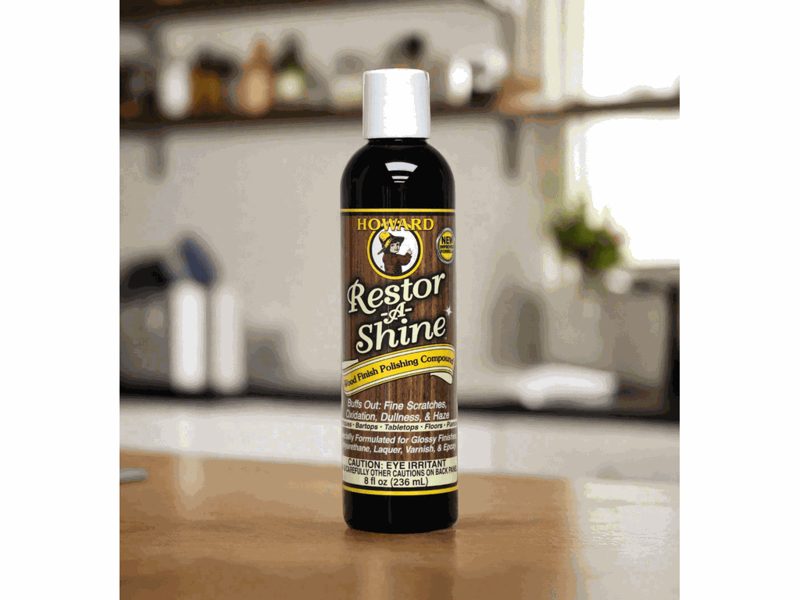 Restor-A-Shine
polishing paste · high-gloss finishes, pianos, guitars›
What about a wooden guitar?
For guitars, violins, ukuleles and other string instruments there is Axe Wax – beeswax and carnauba wax with pure mineral oil for nitrocellulose and polyurethane finishes. Apply a thin coat, let it soak in for 15 minutes and buff. Repeat as needed, roughly every six months.
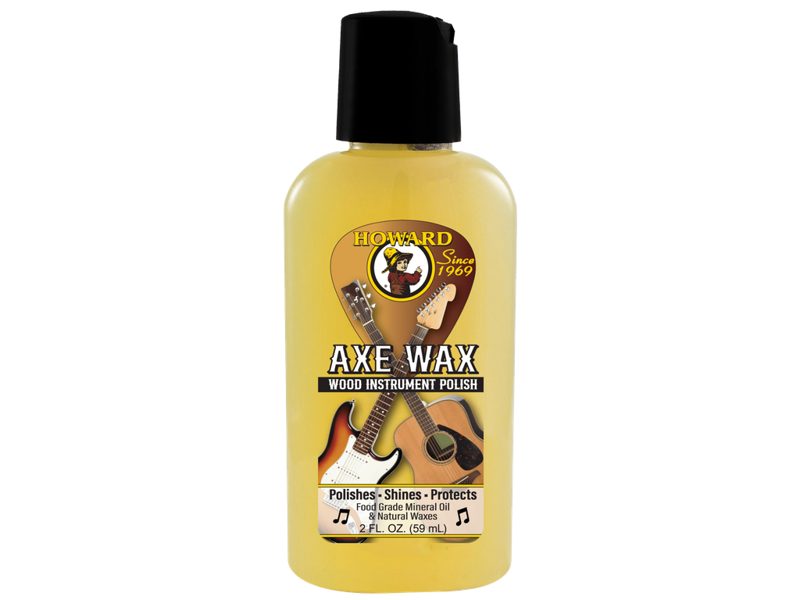 Axe Wax
guitars and string instruments · wax and oil›

05Step 4: feed and protect
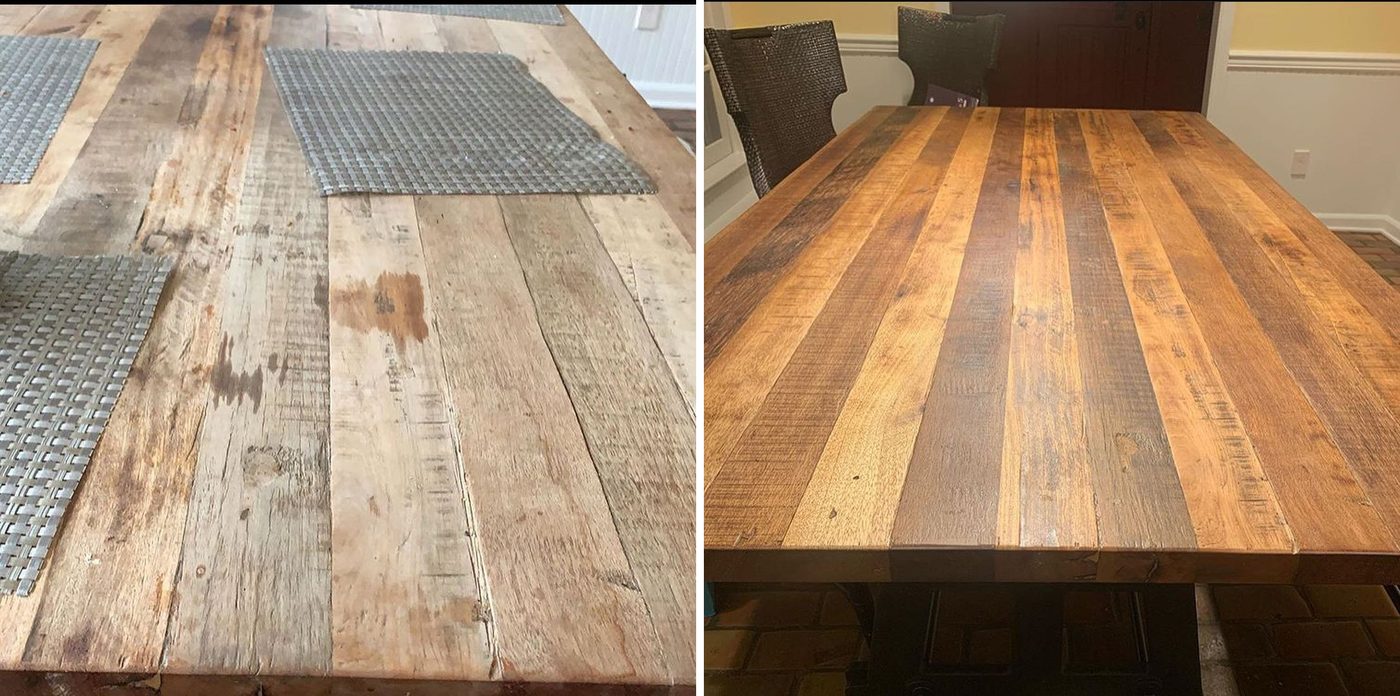
Protect the restored finish with wax no sooner than 30 minutes after Restor-A-Finish. Feed-N-Wax – a beeswax furniture polish with carnauba wax and orange oil – feeds the wood, deepens the grain and protects it from drying out and fading.
- Dust-free surface – wipe it down.
- Apply Feed-N-Wax evenly to the wood with a soft, well-soaked cloth.
- Leave it for at least 20 minutes, then wipe off the excess.
- Buff with a clean soft cloth.
Repeat whenever the wood starts to look dry or faded – usually about once a month.
Regular care: what and when
- Citrus-Shield with carnauba wax gives a longer-lasting, richer shine and also works after Restor-A-Shine: a thin coat in circles, let it dry for 3–5 minutes, buff.
- Orange Oil or Lemon Oil – furniture polishes for routine dusting – clean, add shine and leave no wax build-up. Lemon Oil also suits teak and other oiled woods.
- SunShield by the window and outdoors – UV filters with carnauba wax and beeswax help prevent sun fading. Apply with a soft cloth, let it soak in for 30 minutes and wipe off the excess. It protects against moisture but does not seal the wood against standing water.
- Oiled and waxed furniture without lacquer needs its own care – see wooden furniture care: oil, wax, polishing.
For protection and regular care
According to the manufacturer, Feed-N-Wax is the best follow-up step after Restor-A-Finish. For everyday care a spray oil is enough, and SunShield protects furniture by the window:
 Feed-N-Waxfeeds and protects · beeswax + carnaubaView ›
 Citrus-Shieldpaste wax · long-lasting shineView ›
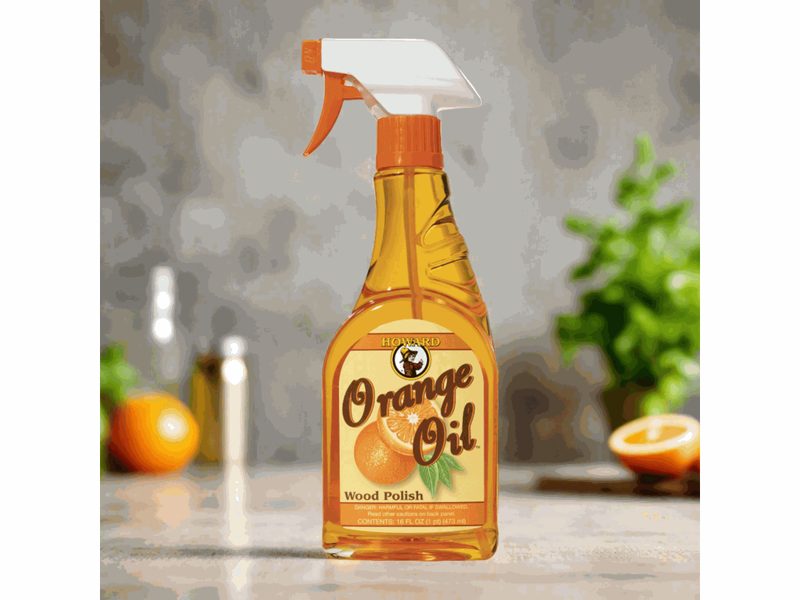 Orange Oilday-to-day care · no wax build-upView ›
 Lemon Oilday-to-day care · teak tooView ›
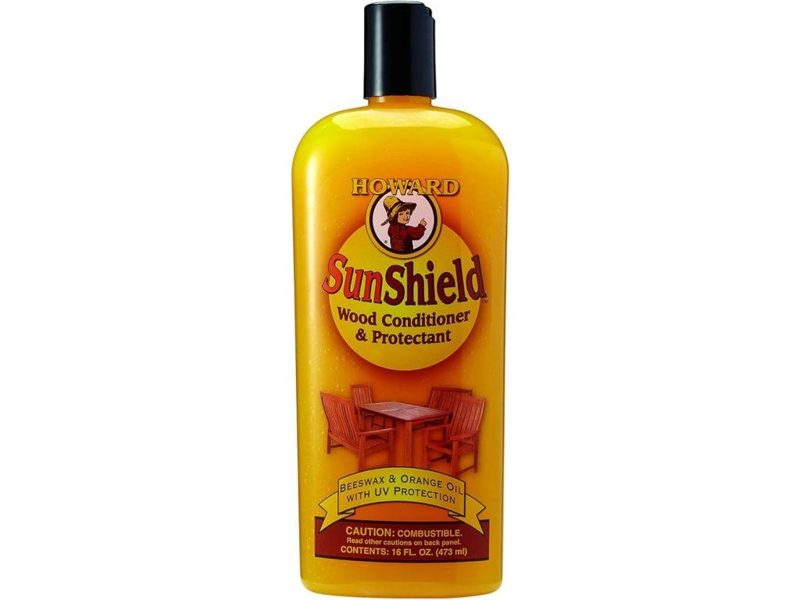 SunShieldby the window and outdoors · UV filters + waxView ›
06Which product for which job
You can do the whole restoration with four products; the others are for special cases.
| Task | Product |
|---|---|
| remove dust, grease, build-up | Clean-A-Finish step 1 |
| bring back colour and shine, white rings, faded spots | Restor-A-Finish + #0000 steel wool step 2, shade to match the wood |
| high gloss on high-gloss lacquer, piano | Restor-A-Shine step 3, high-gloss finishes only |
| feed and protect | Feed-N-Wax or Citrus-Shield step 4, about once a month |
| dusting, everyday shine | Orange Oil / Lemon Oil as needed |
| furniture by the window and outdoors, sun fading | SunShield regularly, UV protection |
| guitars and string instruments | Axe Wax roughly every six months |
07Safety and common mistakes
Restor-A-Finish contains solvents: it is flammable, so are its vapours, and it irritates the eyes and skin. Work with the windows open and a through draught, away from open flames and appliances that can spark.
Wear protective gloves and goggles, especially when working with steel wool and the polishing paste. Don’t use steel wool near live electrical wiring. Protect fabrics, carpets and linoleum – Restor-A-Finish can stain them permanently; scrub any spills straight away with soap and water. Keep the products out of reach of children, in a cool place and tightly closed. Follow the label and the safety data sheet.
- pouring it straight onto the furniture – always apply with a cloth to a small area,
- excess left on – always wipe Restor-A-Finish dry,
- steel wool on high-gloss lacquer with no follow-up step – it dulls the finish; Restor-A-Shine brings the shine back,
- a shade that’s too dark – if in doubt, go lighter and test it on a hidden spot,
- wax under new lacquer – if you refinish, wax only after the lacquer has cured.
- restoration is enough when the finish is intact – just faded, dull or with minor flaws,
- 1 clean with Clean-A-Finish, 2 restore with Restor-A-Finish in the wood’s shade, with #0000 steel wool for white rings,
- 3 high-gloss finishes only: polish with Restor-A-Shine,
- 4 protect with Feed-N-Wax no sooner than 30 minutes later, then about once a month; Orange or Lemon Oil in between, SunShield by the window,
- always test on a hidden spot, ventilate and protect fabrics and carpets.
Bring your furniture back to life
Howard cleaner, restorer in 9 shades, polishing paste and waxes for restoration without sanding.
Browse Howard productsRelated products and categories
- Cleaning: Clean-A-Finish · Restoration: Restor-A-Finish, Super Fine Steel Wool #0000 · Shine: Restor-A-Shine
- Protection: Feed-N-Wax, Citrus-Shield · Day-to-day care: Orange Oil, Lemon Oil, SunShield · Instruments: Axe Wax
- Category: interior wood maintenance and renovation
Related guides
- All Howard products
- Wooden furniture care: oil, wax, polishing – oiled and waxed wood
- How to treat a cutting board with oil and wax – food-contact surfaces
Furniture restoration FAQ
How do you restore old furniture without sanding?
If the original finish is intact and has only faded, dulled or picked up minor flaws, three steps are enough: clean the surface with Clean-A-Finish, bring back the colour and shine with Restor-A-Finish in the wood’s shade, and protect it with Feed-N-Wax. Sanding is only needed where the finish has worn through to bare wood.
Which Restor-A-Finish shade should I choose?
The one that best matches the furniture’s finish – from Neutral for light wood to Ebony Brown for blackish brown. If you’re torn between two, pick the lighter one and test it on a hidden spot first.
How do you remove white mug rings from a lacquered table?
Dip a pad of #0000 steel wool in Restor-A-Finish in a suitable shade and rub lightly with the grain until the ring blends in. Then wipe dry and after 30 minutes treat with Feed-N-Wax. On a high-gloss finish, bring back the shine with Restor-A-Shine.
Can I put new lacquer on furniture after Restor-A-Finish?
Usually there’s no need, as Restor-A-Finish restores the existing finish. If you want new lacquer, wait 30 days for the product to dry completely, test the lacquer on a hidden spot and don’t put wax under it.
How often should furniture be treated with Feed-N-Wax?
Whenever the wood starts to look dry or faded, usually about once a month. In between, dusting with Orange Oil or Lemon Oil is enough.
Is Restor-A-Finish suitable for floors or outdoor furniture?
No. The manufacturer does not recommend it for floors or outdoor surfaces. It also works less well on hard plastic finishes, imitation wood and one-step stain-and-finish products.
Can I use Feed-N-Wax on a cutting board or kitchen worktop?
No, Feed-N-Wax is not intended for food preparation surfaces. Cutting boards and kitchen worktops need products made for food contact – you’ll find the method in our article on treating a cutting board.