We do care about the environment and we want to do more than we have so far. That's why we offer eco packaging — we pack your parcel in recycled and biodegradable materials and cut the carbon footprint of your delivery.
100% recyclable Biodegradable Optional service
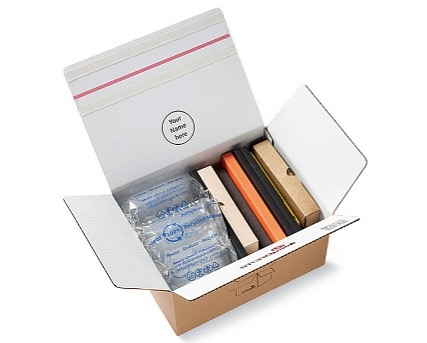
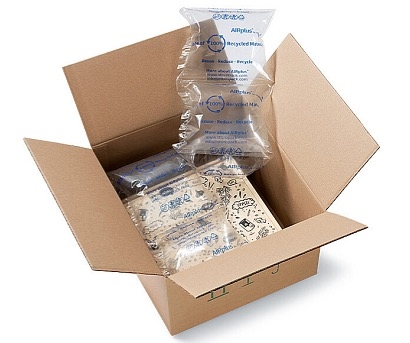
This is how a parcel leaves us in eco packaging — recycled cardboard, paper tape, no needless plastic.
Why eco packaging
Because the box your goods arrive in is part of the product too.
Standard
Recycled boxes for everyone
We pack every order in recycled boxes, not just the ones with eco packaging. That's our baseline, not a paid extra.
Minimal plastic
We replace standard plastic packaging with biodegradable materials and recycled content. Where plastic can't be replaced, we at least use 100% recycled.
Right-sized boxes
The right box size means less filling, less waste and less volume in transit. Sustainability starts with not shipping air.
It isn't cheap. But it's worth it
Let's be honest — the eco option costs more and takes more time.
We use special eco materials that have to be both good-looking and tough enough to protect the goods in transit. That shows in the price. The fee for the ECO PACKAGING service covers part of the cost of reducing your parcel's carbon footprint — we cover the rest.
What exactly we pack in
Five materials — your parcel will travel in some of them.
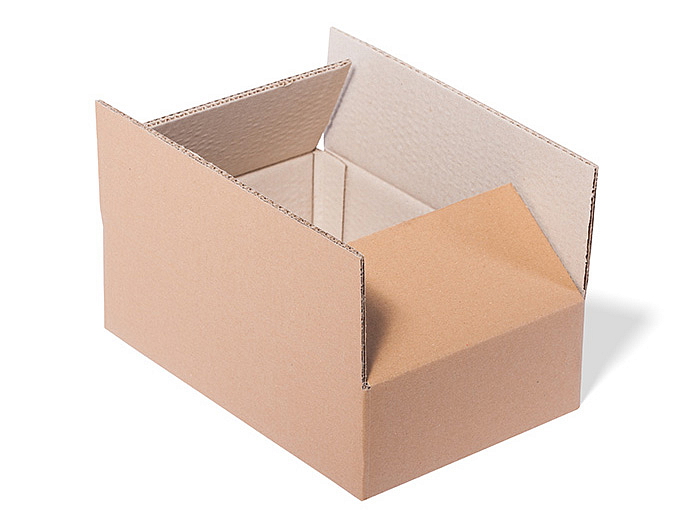
Right-sized cardboard boxes
sturdy 3-layer and 5-layer corrugated board
100% recyclable
100% biodegradable
right size = less waste
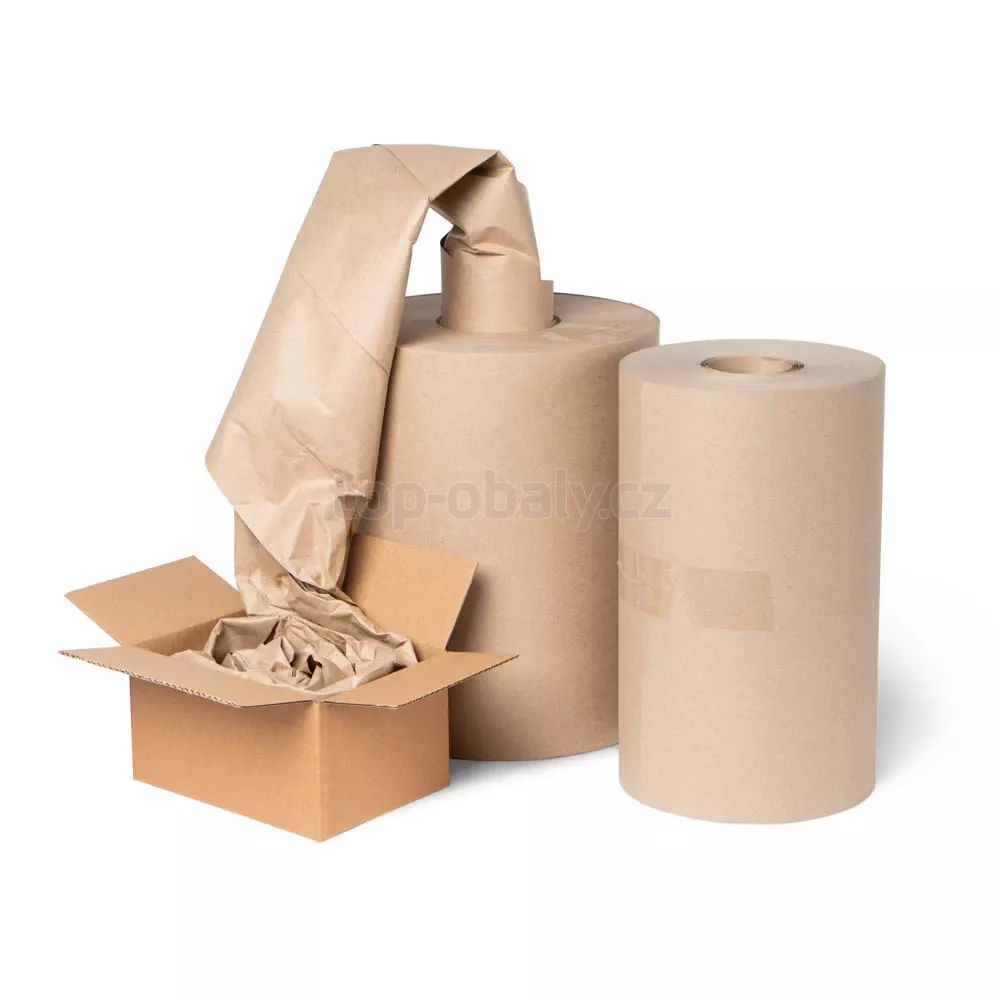
Protective paper
soft and firm, easy to shape
100% recyclable
100% biodegradable
protects goods from dust and dirt
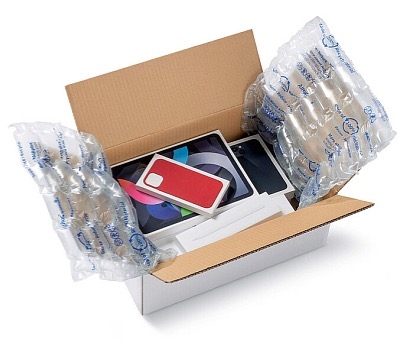
Air cushions from recycled material
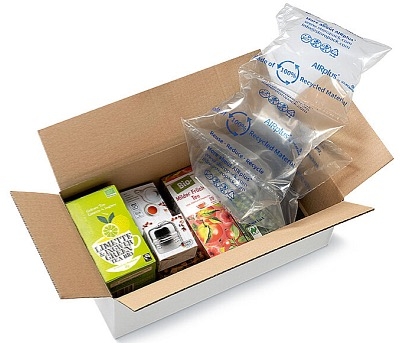
AIRplus® 100% Recycled cushions prove that recycling doesn't have to mean losing quality. They cushion just as well as ones made from virgin material.
made entirely from recycled material — post-consumer and post-industrial
RecyClass certified for 100% recycled content
ClimatePartner certified — carbon footprint measured and reduced
lower CO₂ emissions, the rest is offset
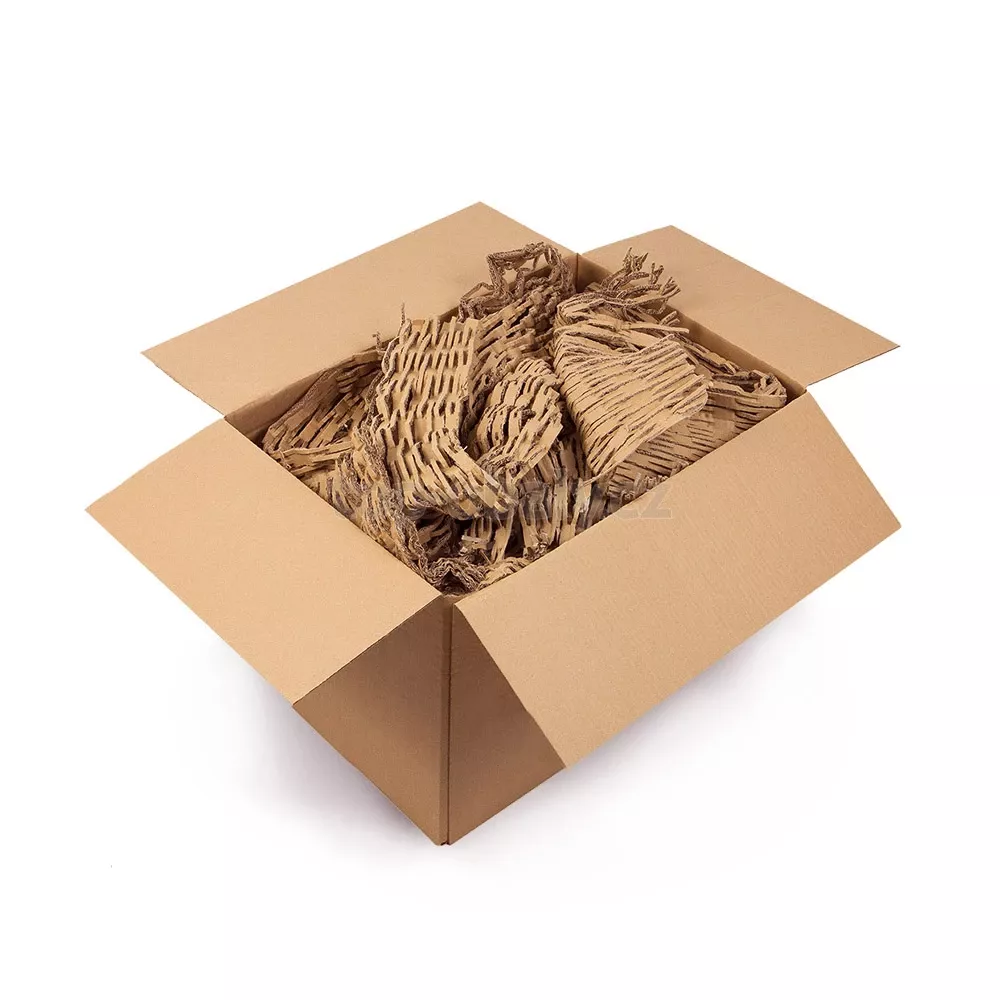
Cardboard filling (shredded)
from damaged recycled boxes — a second life for waste
100% recyclable
100% biodegradable
easy to shape, absorbs impacts
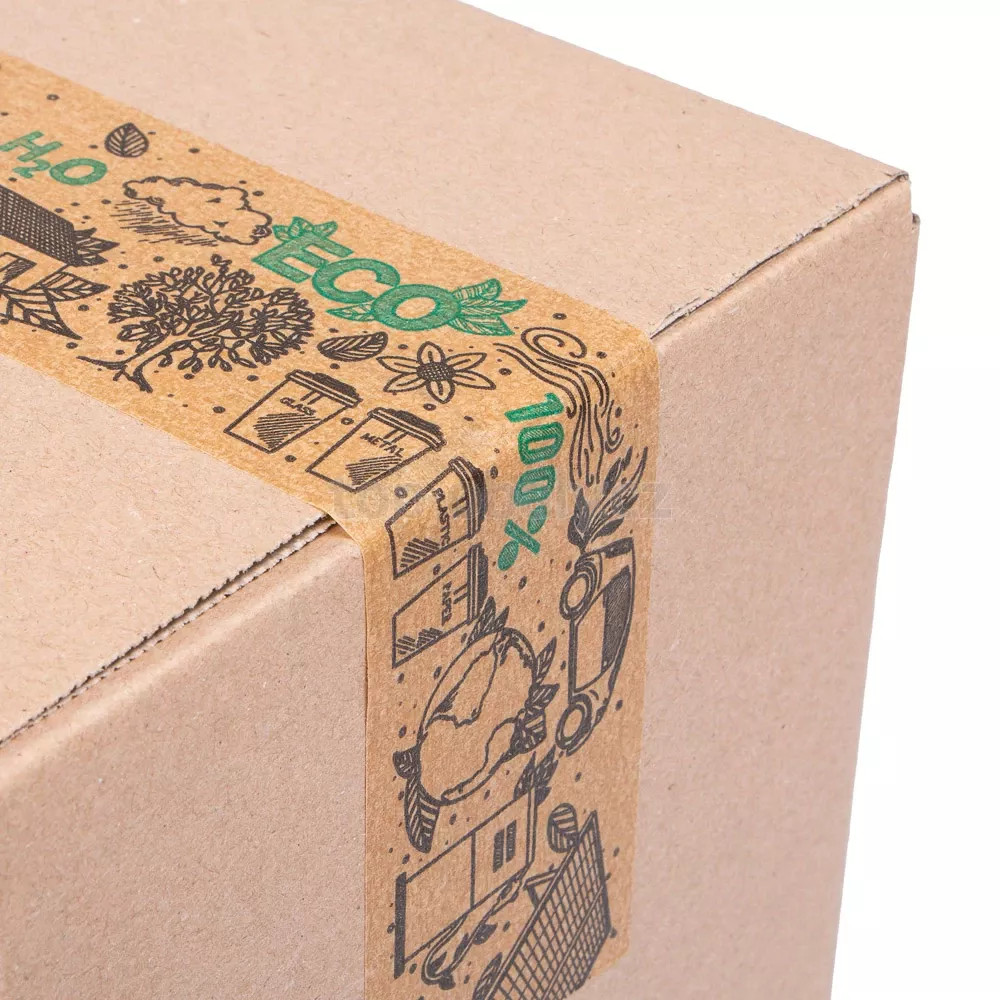
Paper adhesive tape
an eco alternative to ordinary plastic tape
organic water-soluble adhesive
100% recyclable and biodegradable
strong, tear-resistant
What it looks like in practice
Parcels ready to ship. Click to enlarge.
Protecting the goods still comes first
The greenest parcel is the one that doesn't arrive broken and doesn't have to be sent again.
We try to minimise the carbon footprint of every parcel, but never at the expense of protecting what's inside. The recycled board we use is sturdy and absorbs impacts well. We take packing seriously.
Eco packaging isn't always possible. We don't offer it for products with their own shipping packaging or with non-standard dimensions. Inside our box you'll also find the goods packed the way the manufacturer packed them — that part is out of our hands.
Recyclable, but non-returnable
One thing it's only fair to say up front.
Eco packaging can be recycled, but it can't be returned. Once you order the ECO PACKAGING service and we pack your parcel that way, you can't withdraw from this service or ask for different packaging or a refund of the service fee. Your right to return the goods themselves within 14 days is entirely unaffected.
Want your parcel in eco packaging?
Select the ECO PACKAGING service in the cart. We'll take it from there.
Winter, epoxy and shipping: what if the resin arrives frozen?
crystallizationhot water bathsafe warming
Did you receive epoxy in winter that is frozen, cloudy or has white crystals inside? Don't throw it away – in most cases it's completely fine.
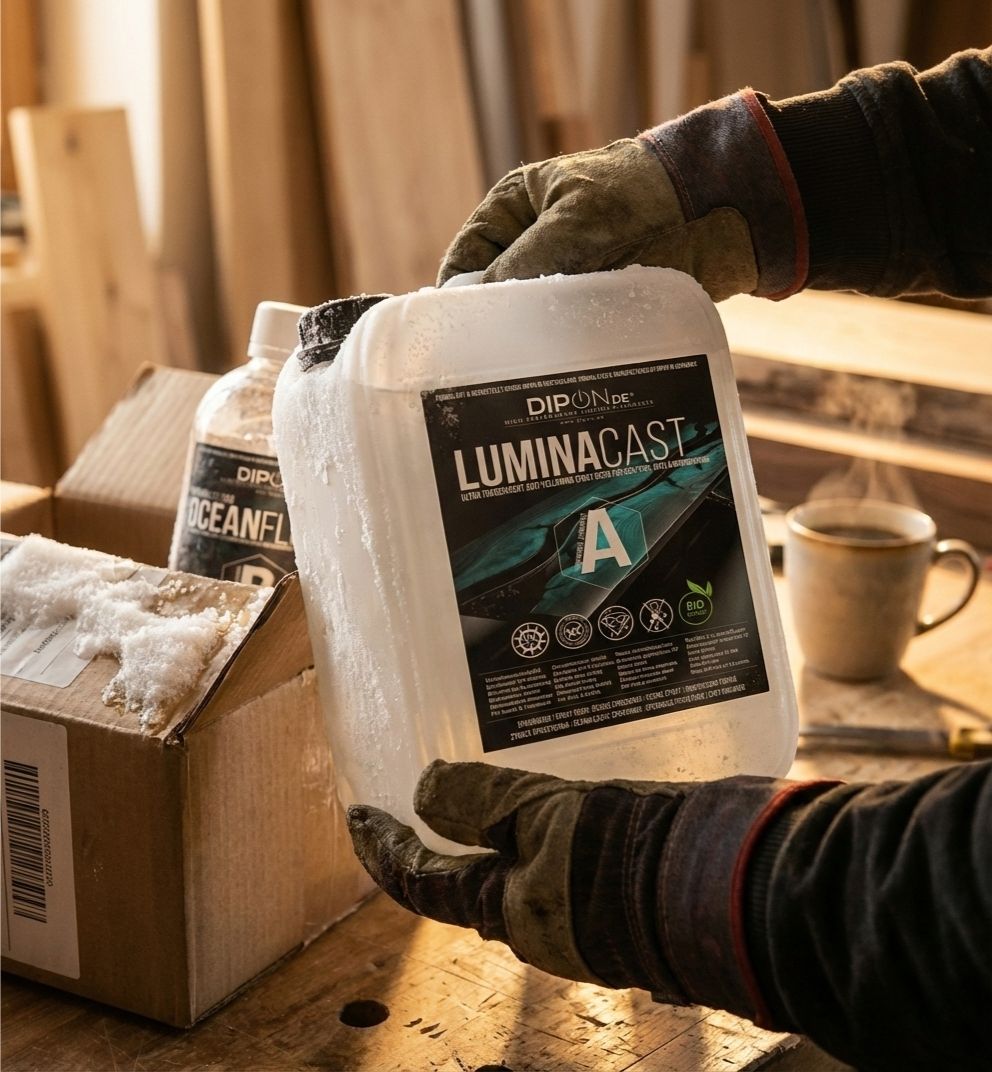
Once the frost season begins, every parcel of epoxy goes through a whole range of temperatures during transport – from a warm warehouse through a freezing truck to your cold doorstep. The result can be a milky look or tiny particles inside the bottle. It's not a defect – just warm the resin correctly and slowly and everything returns to normal.
22–29 °Cideal working temperature
~49 °Chot water bath temperature
22–25 °Cbefore mixing A + B
18–22 °Crecommended storage
01Why does epoxy look cloudy or have white crystals after delivery?
If there is a milky haze, white particles or even clusters of crystals inside the parcel, it's not a fault – but a common reaction to frost and thermal shock.
During transport, epoxy goes through significant temperature changes. In the cold, the molecules in the resin naturally start to bond and crystallize – causing cloudiness or white „flakes“ that can float in both component A (resin) and B (hardener). Sometimes the resin can even be completely frozen if the parcel stood outside for a long time.
What such „frozen“ resin usually looks like after winter shipping:
a milky haze or slight cloudiness of the whole bottle,
white crystals or tiny „flakes“ floating in both A and B,
completely solid, frozen contents in an otherwise intact bottle.
It's not a product defect – just a reaction to frost. Both components (A and B) can in most cases simply be „rescued“ and used safely. Only be cautious with a cracked or leaking bottle or gelled resin – that's no longer crystallization; in that case, contact us.
The quality of the resin matters. Premium LuminaCast systems by DIPON are formulated to be crystallization-stable – even if they temporarily whiten in frost, after warming they reliably return to a perfectly clear state.
02What to do? Slow warming = usually solved
You don't have to fix anything complicated. In most cases it's enough to let the resin acclimatize calmly – from a frozen and cloudy state it returns to clear and ready to pour:
place the whole bottles of resin and hardener indoors at a stable room temperature,
don't rush – let them warm slowly and naturally to about 22–25 °C,
the cloudiness gradually disappears and the epoxy returns to its original clear state.
Don't work with cold epoxy
Warmed product has better viscosity, degasses better and cures correctly. The ideal working temperature for pouring and mixing is between 22 °C and 29 °C.
Making a table? Choose the right LuminaCast
The right temperature pays off especially with deep table pours – and so does the choice of resin. The LuminaCast range has several systems tuned for tables:
If the resin is cloudy or contains white crystals, the fix is simple, safe and you can do it at home in a few minutes – in a hot water bath. The procedure is suitable for both component A and B.
Prepare a container of hot water – ideally about 49 °C.
Immerse only the lower part of the bottle (roughly up to half the handle height).
Let the resin warm slowly and evenly. The crystals gradually dissolve and the mixture returns to a clear state.
After the crystals have fully dissolved, let the epoxy cool to 22–25 °C, only then mix components A + B.
Never immerse the whole bottle up to the cap. A sharp temperature difference can create a vacuum and draw water inside the packaging – which would contaminate the epoxy.
For jewelry and small decorations
Once your resin is clear and ready again, get into small castings and pouring into molds:
Definitely not. A microwave can overheat epoxy unevenly, damage the bottle or even cause a premature exothermic reaction. Use only a hot water bath or slow warming at room temperature.
Does warming epoxy in the sun, e.g. in a black bag, help?
No. This „home trick“ often leads to overheating or incomplete dissolving. Sunlight is not controllable and can permanently damage the epoxy. Avoid direct sun and extreme temperatures.
Can I use epoxy even if it's cloudy or has white haze?
Warm it before you start working. Cloudiness or white haze is a result of crystallization at low temperatures. The solution is slow warming in a water bath (about 50 °C). Never mix crystallized epoxy without regenerating it first.
Is it a problem if I breathe on a fresh casting?
Yes. Human breath contains moisture that can condense on the resin surface and cause a matte film (amine blush). Work in a dry environment and don't lean over the casting.
Is it enough to store epoxy somewhere in the workshop or garage?
The ideal is a dry, tempered environment. Low temperature and humidity can cause crystallization, degradation of the hardener or leaking bottles. Store the components at 18–22 °C, in airtight, upright storage.





 LuminaCast 9 Ocean Flowriver tables and deep pours · pour depth up to 10 cm · thin (runny)View ›
  LuminaCast 8 Table Castcoffee and side tables · pour depth up to 5 cm · thin (runny)View ›
  LuminaCast 1 FastSet Primerwood penetration and sealing before pouring · up to 7 mm · thin, fastView ›
  LuminaCast 4 Gem Flowdefect repairs and small pours · 1–20 mm · medium-thickView ›
 LuminaCast 2 Coaster Castpouring into silicone molds · 1–15 mm · thin (runny)View › ★ BESTSELLER
 LuminaCast 5 Radiant Flowjewelry and decorations, thicker than LC4 · 1–20 mm · thickerView ›
  LuminaCast 10 Cell Flowocean waves and cells (cell effect) · 1–20 mm · medium-thickView ›
 LuminaCast 6 Art Flowart paintings and Petri Art · 1–20 mm · thickView ›
  LuminaCast 7 Design Flowart, GEODE and furniture · 1–20 mm · very thickView ›
 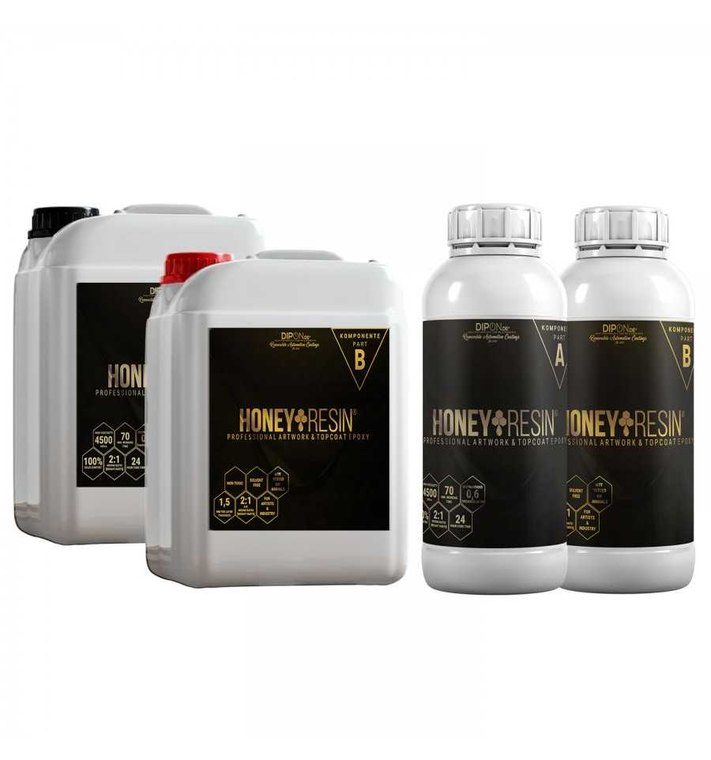 HoneyResinTopCoat and GEODE, thin layers · very thickView ›